Estée Lauder Double Wear Stay-in-Place Makeup is one of the most successful foundations ever sold, and the brand's own Double Wear guide is not shy about it: over 55 shades, 24-hour staying power, and the number-one foundation in the United States. Retailer listings add the rest of the specification — buildable medium-to-full coverage, a matte finish, oil-free, and resistance to heat, humidity and transfer. It is still widely sold, and nothing on this page is an argument that it stopped being good.
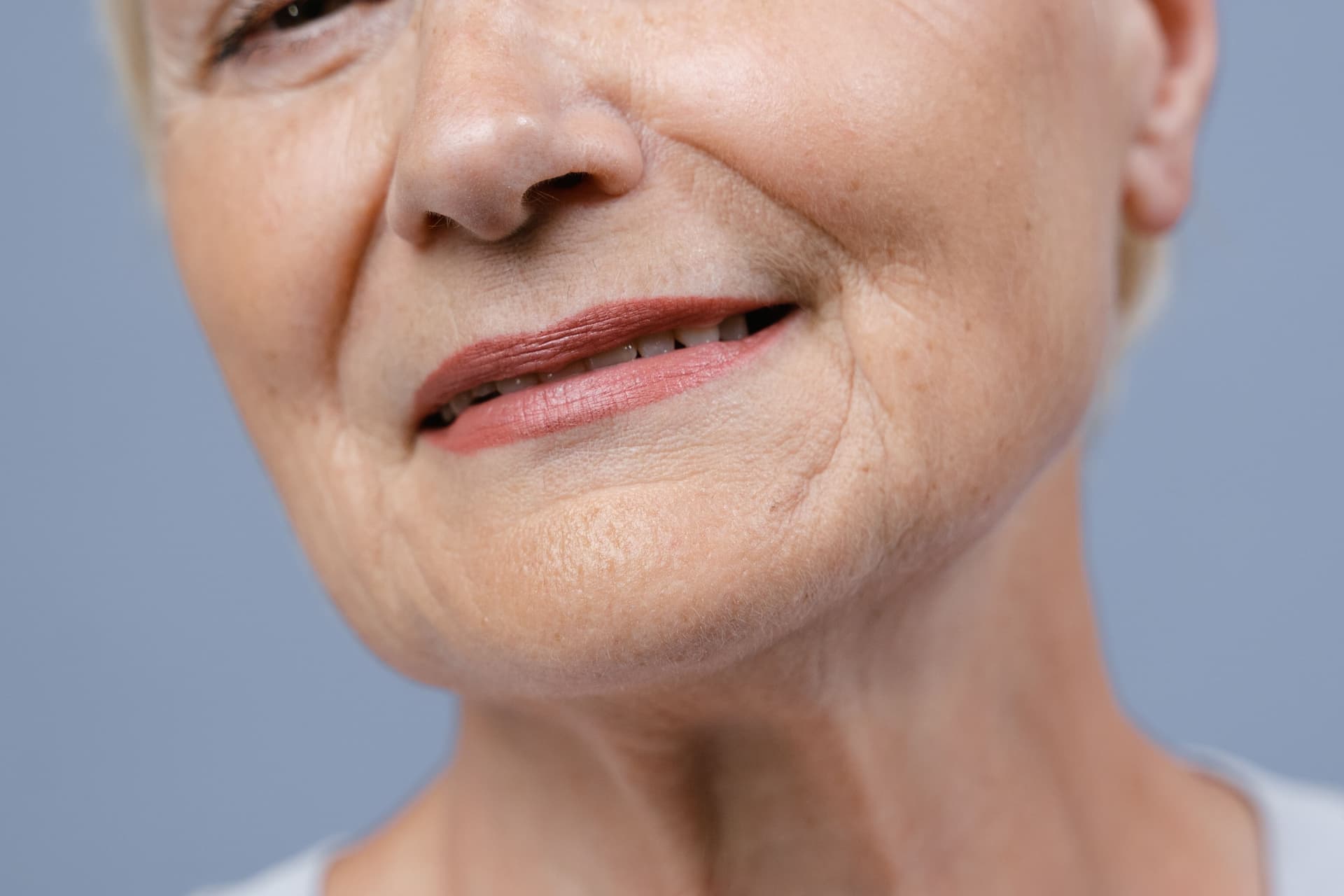
The reason people start searching for an alternative is almost always the same, and it is not a formulation fault. A longwear matte foundation holds its position by forming a dense, low-movement film across the surface of the skin. That is a design achievement and it is the whole point: the film is what resists perspiration, transfer and oil for the length of a double shift or a wedding. But a film engineered not to move still has to deal with a face that moves, and after 50 a face has permanent creases in it — not expression lines that appear and flatten out, but folds that are there at rest.
What happens next is mechanical rather than cosmetic. Product gathers in the fold, because a fold is a channel and the formula has enough body to sit in it. The film sets, and because a set matte film is relatively rigid, it cracks along the fold when you smile rather than bending with it. Then the matte finish removes the one thing that would have disguised all of this: a flat surface reflects light evenly, so every edge, crack and gathered line reads as a hard line instead of getting lost in diffuse reflection. Why foundation settles into wrinkles sets out the mechanism in detail, and it applies to any longwear matte formula rather than to this one specifically.
It is worth being precise about who should ignore all of that and keep buying it. If your skin is still genuinely oily — which over 50 is rarer than people assume, and usually confined to the T-zone — the film is working for you rather than against you. If you need coverage that survives a hot day, heavy perspiration or twelve hours upright, nothing on this page beats it. If you are being photographed with flash, a matte film is the correct choice, and best foundation for photos explains why. And a low-transfer longwear formula is the right answer on the backs of the hands, where skin does not crease and transfer onto clothes and steering wheels is the actual problem — makeup for aging hands and veins makes that case.
What the alternatives here are chosen to preserve. Three things make Double Wear worth replacing properly rather than casually. The shade range is genuinely deep at both ends and sorted by undertone rather than by lightness, which is the difference between finding your shade and settling for the nearest one; a short, badly sorted range is the commonest reason a switch fails. The wear time is real, and some people depend on it. And the coverage ceiling is high — if you have been building Double Wear to full coverage, a sheer skin tint is not an alternative, it is a different product. Every pick below holds at least two of those three.
Our criteria, in order. Does the film stay flexible rather than setting rigid? Is there enough slip to cross a crease instead of settling into it? Is the finish satin rather than flat matte, so that reflection does some of the work? Is the shade range deep enough to make the switch worth attempting? Can you dispense it with hands that are not as strong or as steady as they were? And is there a real budget option, so that the answer is not simply "spend more"? There is: the budget pick here is a drugstore powder.
The mistake to avoid when switching. The instinct after a bad experience with a matte longwear foundation is to buy the opposite — a wet, dewy, glowing formula. That overcorrects, because a high-shine finish reflects light out of every dip in the surface and makes texture more visible rather than less. Satin is the target, and dewy versus matte foundation covers the exceptions properly. The second mistake is dropping coverage further than you need to; if full coverage is genuinely required, best full coverage foundation for mature skin is the page to read next.