Skip to content

Guides

How to stop makeup creasing in smile lines

The crease is not the problem. The amount of product sitting in it is.

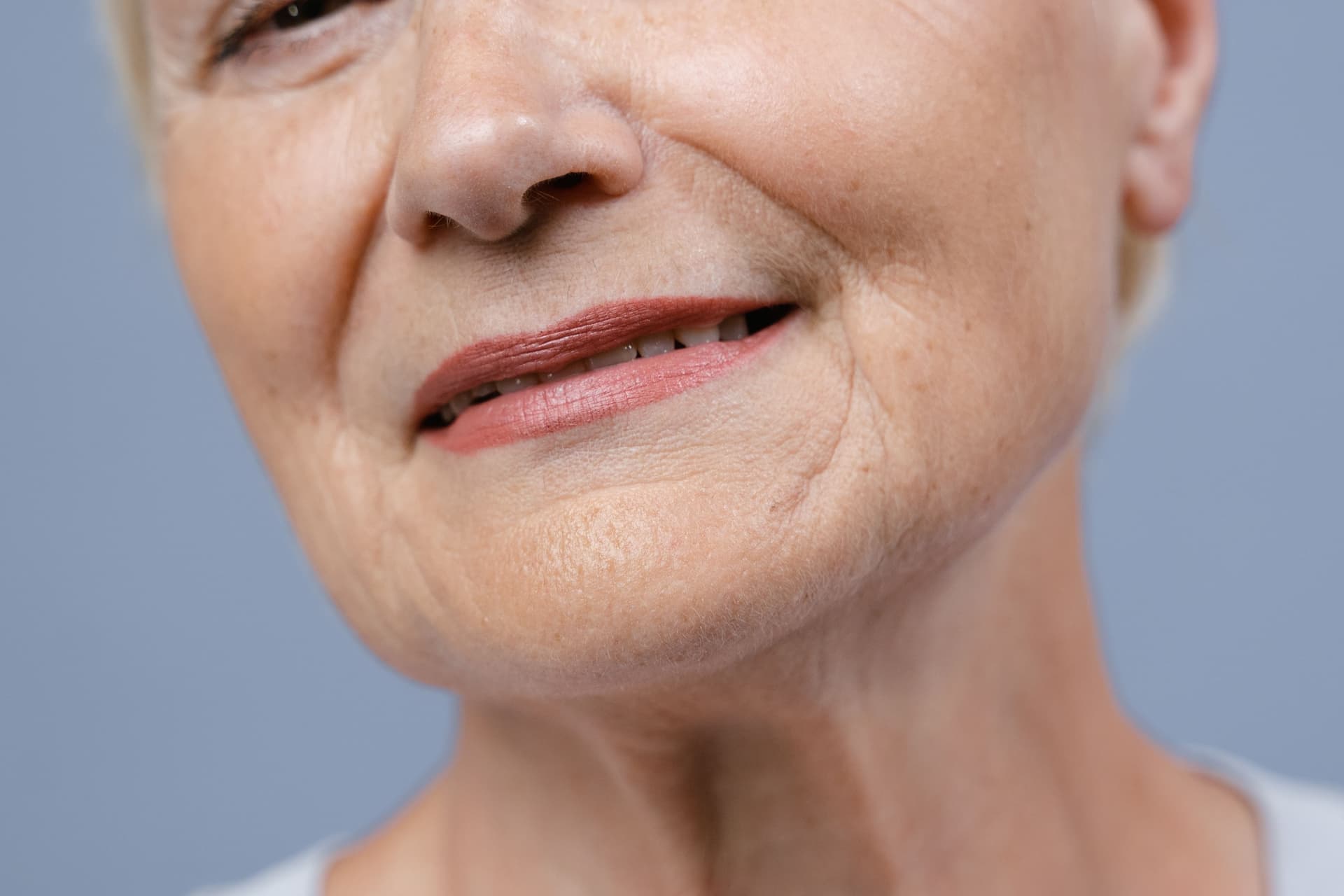
Close detail of an older woman's mouth and skin, showing natural lines and texture

Short answer

Makeup creases in smile lines because too much of it is sitting in a fold that moves every time you speak. Fix it by hydrating and waiting two minutes, using roughly half the base you normally would, pressing it in with a damp sponge instead of sweeping, and setting with a trace of finely milled powder — or nothing at all.

By Brijon M. · Last updated October 5, 2026

Our picks at a glance

Our picks at a glance, ranked. Select a row to read that product's full write-up.
#ProductBest forPrice
1
A plain white cosmetic jar photographed on a neutral studio background

Westman Atelier Vital Skin Foundation Stick

A balm-textured stick built specifically around not dragging on skin, which matters here because dragging is how product ends up in the fold.

Best base to use instead
2
Cosmetic products arranged in a simple display in neutral tones

Trinny London Eye BFF Serum Concealer

If you are going to put concealer anywhere near a smile line it needs to be the thinnest texture you can find, and a serum-textured concealer with light-to-medium coverage is that.

Best concealer for near the fold
3
Cosmetic products arranged in a simple display in neutral tones

EcoTools Bioblender Makeup Sponge

The whole method depends on pressing rather than sweeping, and this is the cheapest way to do it well.

Best tool for the job
4
A plain white cosmetic jar photographed on a neutral studio background

Hourglass Veil Translucent Setting Powder

On the list because step six is where most people undo the previous five.

Best powder if you set at all

Prices live on Amazon and change constantly, so this site does not print a number it cannot verify. Every button goes to the current listing.

Why this is hard over 50

The nasolabial fold — the line running from the side of the nose to the corner of the mouth — is the most reliably creasing spot on a mature face, and it creases for a reason that has very little to do with the quality of your makeup.

The mechanism, plainly. That skin is thicker than the under-eye, and it moves more than anywhere else on your face. Every word you say, every sip, every expression folds and unfolds it. Any product sitting in the groove is being kneaded by that movement, and kneading a film of foundation produces a visible line of foundation within an hour or two. The product has not failed; it has been worked.

What that tells you about the fix. You cannot stop the skin moving, and you cannot make a fold shallower with makeup. The only variable you control is how much product is in the crease — which is why nearly every effective fix on this page is a subtraction rather than a purchase.

The three things that make it worse, in order of how often they are the culprit. First, quantity: a base applied generously over the whole face deposits a disproportionate amount in the fold, because that is where product runs. Second, dryness: a dry crease edge grips product and dries it unevenly, so the line reads lighter and drier than the skin beside it. Third, powder: a heavy set over the area turns a soft film into a dry, cracked seam.

And one thing that helps before you touch a makeup bag. A hydrated fold is a shallower fold. Moisturizer, two full minutes to absorb, and only then base. This step costs nothing and changes the result more than any product swap. The best concealer for smile lines page covers product choice for the same area, and the why foundation settles guide covers the general mechanism.
The picks in full

A plain white cosmetic jar photographed on a neutral studio background
Best base to use instead

Westman Atelier Vital Skin Foundation Stick

foundation stick · Premium price band

A balm-textured stick that buffs out to light-to-medium coverage with a satin finish, built around not dragging on skin.

A balm-textured stick built specifically around not dragging on skin, which matters here because dragging is how product ends up in the fold. Drawn onto the cheekbone and buffed outward it puts coverage where you want it and leaves the crease comparatively bare — far easier to control than a liquid, which runs toward the groove. The wide barrel can be held in a fist rather than a pinch.

How it handles

Twist-up stick with a wide barrel you can hold in a fist rather than a pinch.

What to know

Premium price, and a stick gives less even all-over coverage than a liquid. The satin finish needs a hydrated surface under it.

Cosmetic products arranged in a simple display in neutral tones
Best concealer for near the fold

Trinny London Eye BFF Serum Concealer

concealer · Premium price band

A serum-textured concealer with light-to-medium coverage, formulated with vitamin C and hyaluronic acid.

If you are going to put concealer anywhere near a smile line it needs to be the thinnest texture you can find, and a serum-textured concealer with light-to-medium coverage is that. Used sparingly on the skin beside the fold — not in it — it evens the surrounding tone so the shadow has less contrast to read against. Hyaluronic acid works in the right direction, since hydration is the first lever on fold depth.

How it handles

Wide stackable pot with a doe-foot wand — easier to grip than a slim pen.

What to know

Premium price and sold for the eye area, so this is our application rather than the brand's. It must be set lightly or speaking will move it.

Cosmetic products arranged in a simple display in neutral tones
Best tool for the job

EcoTools Bioblender Makeup Sponge

tool · Drugstore price band

A biodegradable blending sponge with a tapered tip for the under-eye.

The whole method depends on pressing rather than sweeping, and this is the cheapest way to do it well. A tapered sponge tip presses product into the skin beside the nose and along the fold without dragging, and it is the right size to work a small area rather than a whole cheek. Palm-held, so it needs no grip strength.

How it handles

Palm-held, with no grip strength required.

What to know

It needs to be damp, which means squeezing it out. The biodegradable construction breaks down sooner than a synthetic sponge, so plan on replacing it more often.

A plain white cosmetic jar photographed on a neutral studio background
Best powder if you set at all

Hourglass Veil Translucent Setting Powder

setting powder · Premium price band

A very finely milled translucent powder with a low-weight, soft-focus finish.

On the list because step six is where most people undo the previous five. A very finely milled, low-weight translucent powder applied as a trace on a small brush sets a base without building a second film. The fineness is the point: a coarse powder in a moving crease is the single fastest route to a dry, cracked line.

How it handles

Jar with a sifter.

What to know

Premium price for an application you should barely be able to see. The sifter jar needs two hands and spills if your grip slips.

Step by step

  1. Hydrate, then wait two minutes

    Moisturize the whole face and genuinely wait. Two minutes, not twenty seconds. Base applied onto a surface that is still wet mixes with the moisturizer and goes on thicker than you intended, and the fold is where that excess collects.

  2. Use about half the base you normally would

    Half a pump of liquid, or one stick stroke per cheek. You can always add a second thin layer somewhere specific. Most smile-line creasing is one application that was twice as thick as it needed to be.

  3. Work from the center of the face outward, and go around the fold

    Start on the cheekbone and the center of the cheek and work outward. Carry whatever lands near the fold across it rather than down into it. The crease itself needs almost nothing — the skin in there is not what people see.

  4. Press with a damp sponge instead of sweeping

    A damp sponge pressed straight down pushes product into the surface and absorbs the excess. A brush swept across the cheek bridges product over the groove and leaves a bead of it in the bottom, which is the exact thing you are trying to prevent.

  5. Stretch the skin flat and check, before you set

    Smile, then relax. If you can see a band of product in the fold, press a clean damp sponge over it to lift the excess now, while it is still movable. This ten-second check is the highest-value step on the list.

  6. Set with a trace of powder, or not at all

    If your base stays put without powder, skip it here. If it slides, use a very finely milled powder on a small brush, pressed rather than swept, in an amount you can barely see. A heavy set is what turns a soft crease into a dry seam.

  7. Repair at midday with a sponge, never with more product

    Press a clean, slightly damp sponge over the line. It lifts what has collected and reseats the rest. Adding foundation or concealer to even it out makes it worse every single time.

Why it happens in the afternoon and not the morning

Because creasing is cumulative. At 8am the film is fresh, flexible and evenly spread. By 1pm it has lost water, set firmer and been folded several hundred times by ordinary speech. The product that looks creased at lunchtime is not a different product; it has simply had five hours of mechanical working.

Oil moves it too. Sebum production around the nose and mouth loosens the base from underneath over the morning, so it drifts toward the lowest point available — the crease. A light set on the nose and the strip beside it slows this; a heavy set across the fold does not.

Which is why the midday fix is a sponge rather than a product. The material in the crease is your own foundation, relocated. Pressing it out and reseating it is a redistribution job. Adding more gives the fold more to collect.

And why less in the morning beats repair at lunch. Every reduction at the start compounds: less product means less to migrate, less to crack and less to repair. This is the one makeup problem where using half as much genuinely gives a better result rather than a lesser one.

What we have and haven't established

The mechanism here is physical and you can verify the central part of it in a mirror: product placed in a fold that moves constantly is worked out of the fold, and a thicker film shows that working more than a thin one. The water-loss and oil-migration points are ordinary, well-understood behaviors of cosmetic emulsions on skin, not claims specific to this page.

What we have not done is time how long each product lasts in a nasolabial fold, photograph the progression, or run a panel. The textures, finishes and packaging described for each product come from the manufacturer and retailer listings cited below.

Nothing in this guide reduces a smile line. It changes how much makeup is sitting in one for a few hours. Any claim that a cosmetic structurally alters a nasolabial fold is a medical claim, and this site does not make those.

Doing this with sore or unsteady hands

This method is easier with reduced dexterity than the one it replaces, not harder. Pressing with a palm-held sponge tolerates shake in a way that a swept brush stroke does not, and using half as much product means half as much blending.

A stick base removes the dispensing step entirely — no pump to press, no bottle to tip, no amount to judge. Draw it on, buff it out with the sponge.

Brace your working elbow on a table and bring your face toward a mirror rather than holding the hand up. A supported hand shakes less, and the fold beside your nose is a small target.

The stretch-and-check step is worth doing even if you cannot see the detail clearly: smile, relax, then press a clean damp sponge along the line whether or not you can see product in it. Pressing an area that did not need it costs nothing.

Skip the powder if opening a sifter jar one-handed is the hardest part of your morning. On a well-hydrated fold with a thin base, powder is optional rather than required.

Questions people ask

Why does my foundation crease in my smile lines?

Because too much product is sitting in a fold that moves every time you speak. The movement works the film into a visible line. The fix is less product in the crease, not a different foundation.

Should I put concealer in my smile lines?

No. A smile line is a shadow cast by a fold rather than a color problem, so lighter product in it highlights the groove. Even the tone on either side instead and leave the crease as bare as you can.

Does setting powder stop creasing in smile lines?

A trace of a very finely milled powder stops a thin base from sliding. A heavy application does the opposite — it dries the crease edge and turns a soft fold into a cracked seam.

How do I fix creased makeup in my smile lines at midday?

Press a clean, slightly damp sponge over the line. It lifts the collected product and reseats what remains. Do not add more foundation or concealer; that reliably makes it worse.

Is primer worth using to stop smile-line creasing?

A hydrating primer helps if the cause is a dry crease edge. If the cause is quantity, primer adds another layer to a stack that is already too thick — reduce the base instead.

Where this comes from

How this page was put together. Picks are chosen by reading formulas, ingredient lists, packaging and dispensing design, and the reported experience of people with mature skin. Primer & Poise does not operate a laboratory, does not run a tester panel, and does not claim professional cosmetology, esthetics or medical credentials. Where a figure or a claim could not be verified, this page says so instead of filling the gap. Read the full selection method.

Sources