Skip to content

Guides

Does makeup expire?

Yes. And the one that matters most is the one you are least likely to replace.

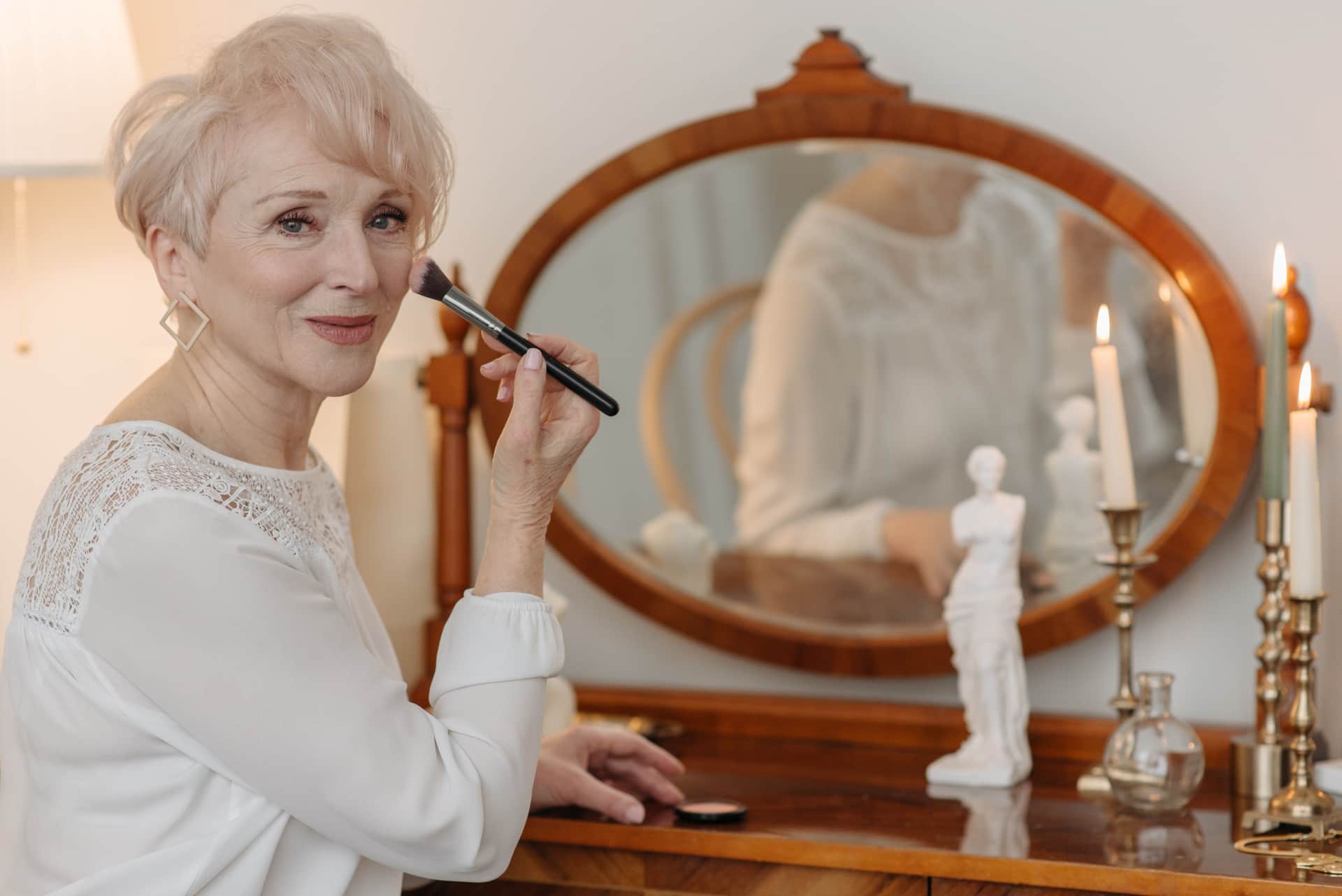
A senior woman applying makeup with a brush beside a mirror

Short answer

Yes. Opened mascara and liquid eyeliner should go after about three months, liquid foundation and concealer after six to twelve, cream products after twelve, and pressed powders and eyeshadows after about two years. Unopened products last longer but not indefinitely. Mascara is the one that matters most and the one people keep longest, because an eye product that has grown bacteria is the only item on this list that can cause a real infection.

By Brijon M. · Last updated October 10, 2026

Our picks at a glance

Our picks at a glance, ranked. Select a row to read that product's full write-up.
#ProductBest forPrice
1
Cosmetic products arranged in a simple display in neutral tones

e.l.f. Cosmetics Lash Xtndr Tubing Mascara

The product this page's main rule argues for.

Best mascara to replace on a schedule
2
Cosmetic products arranged in a simple display in neutral tones

e.l.f. Cosmetics No Budge Precision Eyeliner Pencil

Here for the same reason, applied to the other short-life eye product.

Best liner to replace often
3
A plain white cosmetic jar photographed on a neutral studio background

Laura Geller Baked Balance-n-Brighten Color Correcting Foundation

On this list as the format answer: a baked powder foundation in a pan has a very low water content, so there is little for bacteria to grow in and it is the longest-lived complexion product in this registry.

Longest life of any base here
4
Cosmetic products arranged in a simple display in neutral tones

Real Techniques Miracle Complexion Sponge

A blending sponge is the most contaminated object in most makeup bags and the one almost nobody treats as a product with a shelf life.

The thing you forget to replace

Prices live on Amazon and change constantly, so this site does not print a number it cannot verify. Every button goes to the current listing.

Why this is hard over 50

Makeup does not have a hard expiry date in the way food does, which is why the question keeps getting asked and keeps getting answered badly. What it has is a period after opening — the point at which the preservative system can no longer be relied on and the formula starts to change.

How to find the number on the packaging. Look for a small open-jar symbol with a number and the letter M beside it: 6M, 12M, 24M. That is the manufacturer's stated period after opening, in months, and it starts the day you open it rather than the day you buy it. A separate printed date, if there is one, is usually the unopened shelf life. Not every product carries both, and the symbol is often tiny and embossed rather than printed, which matters if your near vision is not what it was.

Why the dates are shorter than people assume. Three things degrade a product: bacteria introduced every time a wand or finger goes in, oxidation of oils and pigments once air gets to them, and the slow failure of the preservative system. Wet products with an applicator that goes back into the tube are the worst case on all three counts, which is why mascara has the shortest life of anything in a makeup bag.

The one that genuinely matters. Old mascara and old liquid eyeliner are the only products on this page that carry a real health risk rather than a performance one, because the eye is a mucous membrane and a contaminated wand is going straight onto it. Eye infections from old mascara are well documented. Everything else on the list gets worse rather than dangerous.

Why this page is on a site about mature skin. Because the most common starting point for someone returning to makeup in their sixties or seventies is a drawer that has not been cleared out in fifteen years — and because the products most likely to be in there are the eye products, which are the ones with the shortest lives. Clearing the drawer is genuinely step one, before any of the advice on how to build a mature skin makeup routine is worth following.

The picks in full

Cosmetic products arranged in a simple display in neutral tones
Best mascara to replace on a schedule

e.l.f. Cosmetics Lash Xtndr Tubing Mascara

mascara · Drugstore price band

A budget tubing mascara that coats each lash in a water-resistant polymer tube.

The product this page's main rule argues for. Mascara needs replacing every three months or so, and the practical obstacle is that nobody wants to throw away something expensive four times a year — so the sensible answer is a mascara cheap enough that the schedule is painless. This is a budget tubing mascara that coats each lash in a water-resistant polymer tube, and tubing has a second advantage here: it removes with warm water rather than solvent, which means less tugging at a lash line that replaces lost lashes slowly.

How it handles

Screw-cap tube.

What to know

Budget pigment and a budget wand, so less definition and less separation than a premium formula — clumps need combing out. Tubing needs warm water and patience to remove, which is more of a routine than the price suggests.

Cosmetic products arranged in a simple display in neutral tones
Best liner to replace often

e.l.f. Cosmetics No Budge Precision Eyeliner Pencil

eyeliner · Drugstore price band

A firm gel-pencil liner that draws a tight line close to the lash base.

Here for the same reason, applied to the other short-life eye product. A twist-up firm gel pencil at drugstore price is cheap enough to replace yearly without thinking about it, and the twist-up format means you can always expose a fresh surface rather than using a tip that has been collecting skin and bacteria. A pencil is also inherently lower risk than a liquid liner, because there is no wet reservoir for anything to grow in.

How it handles

Twist-up pencil with a slim barrel.

What to know

The barrel is slim, so it needs a pinch grip and a reasonably steady hand. It sets firm, so it needs a proper remover rather than water, and an old pencil goes crumbly — which is the thing to watch for rather than a date.

A plain white cosmetic jar photographed on a neutral studio background
Longest life of any base here

Laura Geller Baked Balance-n-Brighten Color Correcting Foundation

powder foundation · Mid price band

A baked powder foundation that goes on creamy and sets demi-matte, with buildable light-to-medium coverage.

On this list as the format answer: a baked powder foundation in a pan has a very low water content, so there is little for bacteria to grow in and it is the longest-lived complexion product in this registry. If you wear makeup occasionally rather than daily, a liquid foundation will oxidize in the bottle long before you finish it, and a powder simply will not. The compact is also the easiest container here to handle, with nothing to pump and nothing to spill.

How it handles

A pan in a compact — nothing to pump, no cap to twist and nothing to spill. Applied with the supplied sponge or a brush.

What to know

It needs a hydrated surface and will cling on flaky skin. The shade range is narrower than the liquids, and the surface will develop a hard shiny film from oils on the sponge — scrape that off rather than assuming the product has gone.

Cosmetic products arranged in a simple display in neutral tones
The thing you forget to replace

Real Techniques Miracle Complexion Sponge

tool · Drugstore price band

A latex-free blending sponge with a flat edge and a rounded base.

A blending sponge is the most contaminated object in most makeup bags and the one almost nobody treats as a product with a shelf life. It is damp, it is porous, it collects foundation and skin oil, and it lives in a warm bag. This one is a latex-free sponge with a flat edge and a rounded base — a good tool, and cheap enough to replace every three months, which is what it needs. Wash it weekly with soap and warm water and let it dry fully.

How it handles

Held in the palm rather than pinched, which is why a sponge is often easier than a brush with sore finger joints.

What to know

It absorbs some of your foundation, so you use slightly more product per application. Replacing it quarterly and washing it weekly is a maintenance habit, and a sponge that has been left damp in a closed bag should be thrown away rather than washed.

Shelf lives, product by product

Mascara and liquid eyeliner: about three months after opening. Shortest life of anything, highest risk, and the wand carries bacteria back into the tube every single use. Replace on a schedule rather than when it runs out. If it smells different, has gone stringy or clumps on a wand you just wiped, it is already past it.

Liquid and serum foundation, liquid concealer: six to twelve months. Pumps last longer than open-neck bottles and droppers, because less air and no fingers get in. Separation that will not remix, a change in smell, or a color that has gone darker or more orange are all signs of oxidation.

Cream products — cream foundation, cream blush, cream shadow, correctors in pots: about twelve months. Anything you put a finger into is on the shorter end. A stick or twist-up format lasts longer than a pot for exactly that reason.

Pressed powders, powder foundation, powder eyeshadow and blush: around two years. Low water content means little for bacteria to grow in. The thing that ages them is a hard, shiny film on the surface from skin oils on a brush — scrape that off and the product underneath is usually fine.

Pencils, brow pencils and gel liner pots: one to two years for pencils, around twelve months for a pot. A pencil can be sharpened or twisted to a fresh surface, which is why it lasts; a pot cannot.

Lipstick and lip products: one to two years. They go waxy, change smell and stop applying smoothly rather than becoming unsafe.

Sponges and brushes: a sponge every three months with weekly washing, brushes for years with monthly washing. A dirty sponge is the most contaminated object in most makeup bags and the one nobody thinks of as a product.

Anything with SPF: use the printed date, not the open-jar symbol. Sun filters lose effectiveness as they degrade, and a foundation with lapsed SPF is a foundation, not a sunscreen.

How to tell without the date

Smell it. This is the most reliable test there is. Rancid oils, a sour note, or a smell that is simply different from what you remember all mean the formula has changed.

Look for separation that will not remix. Shaking a liquid foundation should bring it back together. If it does not, the emulsion has broken.

Check the color against a shade you know. Oxidized foundation and concealer go darker and warmer. If it was a match and now goes orange on you an hour later, that is the product, not your skin.

Feel the texture. Mascara gone stringy, a cream gone grainy, a pencil gone crumbly, a powder with a hard shiny film on top — all of them are telling you the same thing.

Watch for stinging or itching that was not there before. Any new irritation from a product you have used happily is a reason to stop using it, regardless of its age.

Write the month on the base with a marker when you open it. Thirty seconds, and it removes the guesswork entirely. This is the single most useful habit on the page.

What we have and haven't established

The open-jar period-after-opening symbol and the convention of stating it in months are standard cosmetic labeling practice, and the figures we give per category are the widely published industry guidance for those categories rather than measurements of our own.

That contamination risk is highest in wet products with a re-inserted applicator, and that eye products carry a genuine infection risk because the eye is a mucous membrane, is well-established and is why mascara is treated separately on this page.

The sensory tests in the section above are practical heuristics, not laboratory methods. They detect a formula that has changed; they cannot detect bacterial contamination, which is invisible and odorless in its early stages. That is exactly why the mascara rule is a calendar rule rather than a judgment call.

Formats, applicator types and container details for the products named come from the manufacturer and retailer listings cited below. Every product was confirmed currently on sale before being featured.

Nothing here is medical advice. If you have eye pain, discharge, swelling or any change in vision, stop using every eye product and see a doctor — that is not a shelf-life question.

What we'd skip

Keeping mascara past three months because it still has product in it. This is the one rule on the page that is about health rather than performance.

Adding water, saline or eye drops to revive dry mascara. It introduces bacteria into exactly the wrong product and dilutes what preservative is left.

Sharing eye products, including with family. The infection route this page is about is a shared wand.

Keeping a foundation because the shade was perfect. Oxidized foundation is no longer that shade — it has gone darker and warmer, which is why it looks wrong an hour after you put it on.

Trusting an unopened product indefinitely. Oils oxidize and preservative systems age in a sealed container too, just more slowly. A decade-old unopened foundation is not a bargain.

Relying on smell alone for eye products. Bacterial contamination is invisible and odorless early on, which is precisely why mascara gets a calendar rule instead of a sniff test.

If you cannot read the tiny symbol

The open-jar symbol is often embossed rather than printed, which makes it close to invisible without good light and magnification. It is a genuine accessibility failure in cosmetic packaging and not something you are doing wrong.

Write the month on the base with a thick marker the day you open it. Large digits, your own handwriting, on the bottom where you will see it. This replaces the symbol entirely and takes thirty seconds.

Or use a phone camera as a magnifier. Photograph the packaging and zoom in on the picture — far easier than trying to focus on embossed plastic at reading distance.

A lighted magnifying mirror on a stand helps here too, not only for application. See best makeup mirror for low vision.

Set one recurring reminder for mascara. Every three months, one product, one decision. It is the only item on this page where the date genuinely matters, so it is the only one worth a reminder.

Clear the drawer sitting down, in daylight, with a bin beside you. Smell each product, check the texture, and be decisive. Anything you cannot identify or do not remember buying goes.

Questions people ask

Does makeup expire?

Yes. Most products carry a period-after-opening figure shown as an open-jar symbol with a number and the letter M — 6M, 12M, 24M — which runs from the day you open it. Mascara is about three months, liquid foundation six to twelve, creams twelve, pressed powders around two years.

How long does mascara last after opening?

About three months. It has the shortest life of anything in a makeup bag because the wand carries bacteria back into the tube every use, and it is the only product here with a real infection risk, since the eye is a mucous membrane.

Is it bad to use expired makeup?

For eye products, yes — old mascara and liquid liner can cause eye infections. For everything else the risk is mostly performance: oxidized foundation turns darker and warmer, creams go grainy, powders develop a hard film. New stinging or itching from any product means stop using it.

Does unopened makeup expire?

Yes, more slowly. Oils oxidize and preservative systems age even in a sealed container, so a very old unopened foundation is not reliable. Use the printed date if there is one rather than the open-jar symbol, which only starts once you open it.

How do I tell if makeup has gone off without a date?

Smell it first — that is the most reliable test. Then look for separation that will not remix, a color that has gone darker or more orange, and a texture that has gone stringy, grainy or crumbly. Write the month on the base when you open something and you will not need any of this.

How often should I replace makeup sponges and brushes?

A sponge every three months with a weekly wash, brushes for years with a monthly wash. A damp sponge in a warm bag is the most contaminated object most people carry, and almost nobody thinks of it as having a shelf life.

Do foundations with SPF expire sooner?

Go by the printed date rather than the open-jar symbol, because sun filters lose effectiveness as they degrade. Once that date has passed, treat the product as a foundation with no meaningful sun protection.

Where this comes from

How this page was put together. Picks are chosen by reading formulas, ingredient lists, packaging and dispensing design, and the reported experience of people with mature skin. Primer & Poise does not operate a laboratory, does not run a tester panel, and does not claim professional cosmetology, esthetics or medical credentials. Where a figure or a claim could not be verified, this page says so instead of filling the gap. Read the full selection method.

Sources