Skip to content

#AdWe earn commission on qualifying purchases made through links on this page. It never changes what we pick or how it ranks. How this works.

Foundation

Foundation that photographs well

A camera flash sees a face differently from a mirror. Most of what goes wrong is one ingredient.

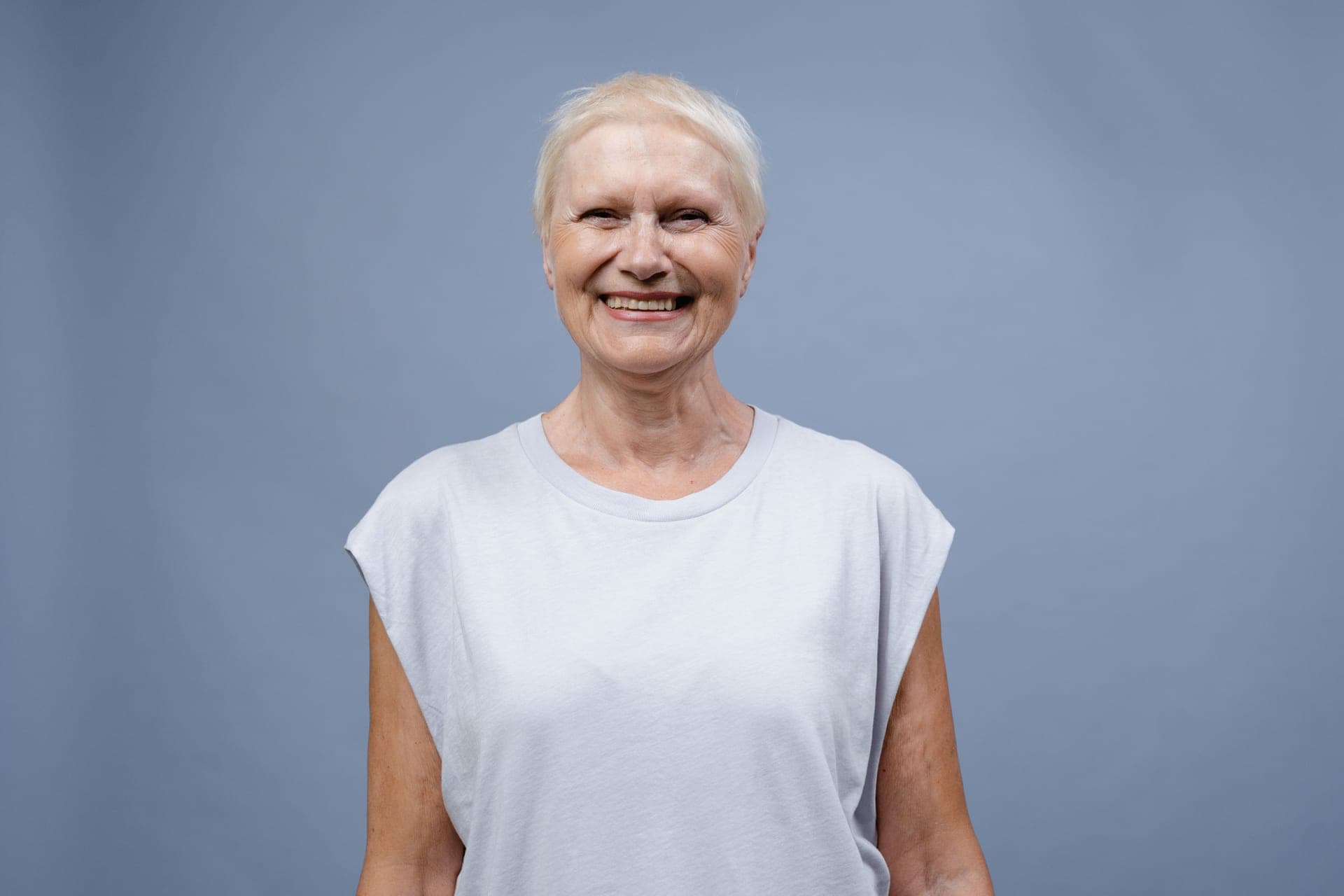
A smiling senior woman with short white hair, photographed against a plain studio backdrop

Short answer

The Revlon PhotoReady Candid Natural Finish Foundation is the pick: a lightweight liquid with a natural finish and no high mineral SPF load, which is the combination that photographs cleanly. The Clinique Even Better Makeup SPF 20 is the better choice if you want more coverage with still-low flashback risk. The single change that improves a photograph most is removing the high-SPF base, not adding product.

By Brijon M. · Last updated October 10, 2026

Our picks at a glance

Our picks at a glance, ranked. Select a row to read that product's full write-up.
#ProductBest forPrice
1
A plain white cosmetic bottle on a neutral beige background

Revlon PhotoReady Candid Natural Finish Foundation

A lightweight liquid with a natural finish and an antioxidant-led ingredient list, and no high mineral SPF figure to bounce a flash.

Best overall
2
A plain white cosmetic bottle on a neutral beige background

Clinique Even Better Makeup SPF 20

The right answer if light coverage is not enough and you still want to photograph cleanly.

Best for more coverage
3
A plain white cosmetic bottle on a neutral beige background

Armani Beauty Luminous Silk Foundation

A buildable medium-coverage liquid with a radiant, silk-like finish and a broad shade range — and radiance is a calculated risk that pays off in controlled light.

Best for a professional portrait session
4
A plain white cosmetic jar photographed on a neutral studio background

Laura Geller Baked Balance-n-Brighten Color Correcting Foundation

On this list because powder is the most common way a photograph goes wrong, and this product removes the step.

Best for avoiding powder altogether
5
A plain white cosmetic jar photographed on a neutral studio background

Hourglass Veil Translucent Setting Powder

Here with a strict instruction attached.

Best powder, used sparingly

Prices live on Amazon and change constantly, so this site does not print a number it cannot verify. Every button goes to the current listing.

Why this is hard over 50

A camera is not a mirror, and the gap between the two is where most disappointing photographs of a made-up face come from. Over 50 there are three specific effects worth knowing about, and only one of them is about aging at all.

Flashback is the big one. Zinc oxide and titanium dioxide, the mineral filters in most high-SPF makeup, reflect visible light as well as ultraviolet. Under a direct flash a thick mineral layer bounces that light straight back at the lens, and the face comes out noticeably paler and flatter than the neck. It is invisible in daylight and in the bathroom mirror, which is why people only discover it in the photographs. Mature-skin foundations are unusually likely to carry a high SPF figure, so this niche meets the problem more than most — the full SPF argument is on best foundation with SPF for mature skin.

Shine reads as grease, not as glow. A luminous base looks healthy in person because your eye reads the whole moving face. A still frame with a flash records a specular highlight on the nose, forehead and cheekbones as a bright patch. Dewy finishes that flatter in life frequently do not photograph.

And matte reads as texture. The opposite mistake. A flat matte base, especially one set with powder, records every line and pore it has settled into, because there is no light scatter to soften the edges. Powder is the most over-applied product in photography and the one that most reliably ages a face in a photograph.

Which leaves a narrow and very specific target: a natural or satin finish, at medium coverage, with as little mineral SPF as you can accept, powdered only on the T-zone, applied slightly more evenly than you would for a normal day. That is the whole brief, and every pick below is chosen against it.

One note on what this page is not. Searches about makeup for senior portraits are mostly about high-school senior photography, which is a different subject and a different face. This page is about photographing skin over 50 — a professional portrait, a family gathering, a passport or ID photograph, a video call.

The decision table

PickSPF loadFinishCoverageFlash behavior
Revlon PhotoReady CandidNone statedNaturalLightCleanest here
Clinique Even BetterSPF 20, lowNaturalMediumLow risk
Armani Luminous SilkNone statedRadiantMedium, buildableNeeds T-zone powder
Laura Geller Balance-n-BrightenNone statedDemi-matteLight to mediumSelf-setting, no extra powder
Hourglass Veil Setting PowderNoneSoft-focusNoneUse on T-zone only

The picks in full

A plain white cosmetic bottle on a neutral beige background
Best overall

Revlon PhotoReady Candid Natural Finish Foundation

liquid foundation · Drugstore price band

A lightweight liquid with a natural finish and an antioxidant-led ingredient list.

A lightweight liquid with a natural finish and an antioxidant-led ingredient list, and no high mineral SPF figure to bounce a flash. That absence is the reason it leads this list: on a photography page the most valuable property a base can have is the thing it does not contain. The natural finish sits between the two failure modes — it neither records as a grease spot nor as a dry, textured flat, which is exactly what you want in a still frame. Drugstore price, so it is reasonable to own one base purely for photographs.

How it handles

Dropper bottle. The dropper bulb needs a pinch grip to squeeze.

What to know

Light coverage, so significant pigmentation will need concealer placed over it. The dropper bottle needs a pinch grip on the bulb, which is the hardest container here to use with sore fingers, and the thin formula wants two passes to look even.

A plain white cosmetic bottle on a neutral beige background
Best for more coverage

Clinique Even Better Makeup SPF 20

liquid foundation · Mid price band

A lightweight liquid with medium coverage, a natural finish and a wide shade range.

The right answer if light coverage is not enough and you still want to photograph cleanly. SPF 20 is the lowest figure among the SPF bases in this registry, so the mineral load is small and the flashback risk with it; the finish is natural rather than luminous or matte; and the shade range is wide, which matters under a flash because a flash is merciless about a base that does not match the neck. Medium coverage in a lightweight liquid means an even surface without a thick film.

How it handles

Pump bottle.

What to know

SPF 20 is still an SPF, so it is not quite as clean under a flash as a base with none. For an outdoor portrait session it is not adequate sun protection on its own, and it will want a trace of powder on the T-zone under studio lights.

A plain white cosmetic bottle on a neutral beige background
Best for a professional portrait session

Armani Beauty Luminous Silk Foundation

liquid foundation · Premium price band

A buildable medium-coverage liquid with a radiant, silk-like finish and a broad shade range.

A buildable medium-coverage liquid with a radiant, silk-like finish and a broad shade range — and radiance is a calculated risk that pays off in controlled light. In a studio, where a photographer is using soft diffused light rather than a direct on-camera flash, the light scatter from a radiant base is what keeps mature skin from reading as flat and papery. The broad shade range also earns its place here: matching the jaw and neck precisely matters more under professional lighting than anywhere else.

How it handles

Pump bottle. The pump takes a firm flat press rather than a pinch.

What to know

Premium price, and in direct flash the radiance turns into visible shine on the nose and cheekbones, so it needs powder on the T-zone and a photographer who is not using a bare flash. The pump takes a firm flat press rather than a pinch.

A plain white cosmetic jar photographed on a neutral studio background
Best for avoiding powder altogether

Laura Geller Baked Balance-n-Brighten Color Correcting Foundation

powder foundation · Mid price band

A baked powder foundation that goes on creamy and sets demi-matte, with buildable light-to-medium coverage.

On this list because powder is the most common way a photograph goes wrong, and this product removes the step. A baked powder foundation applied with a damp sponge goes on creamy and sets demi-matte on its own, so there is no second powdering layer to settle into lines and record as texture. Demi-matte is also the safest finish under an unpredictable flash: less specular highlight than a radiant base, less flatness than a true matte. The compact needs no pump and cannot spill, which is useful in a handbag at an event.

How it handles

A pan in a compact — nothing to pump, no cap to twist and nothing to spill. Applied with the supplied sponge or a brush.

What to know

It needs a hydrated surface and will cling on flaky skin, which a flash will show clearly. Shade range is narrower than the liquids, and light-to-medium coverage means pigmentation still needs concealer.

A plain white cosmetic jar photographed on a neutral studio background
Best powder, used sparingly

Hourglass Veil Translucent Setting Powder

setting powder · Premium price band

A very finely milled translucent powder with a low-weight, soft-focus finish.

Here with a strict instruction attached. If you are going to powder for a photograph, it has to be very finely milled and very low weight, because coarse powder is what records as a dry textured patch under a flash. This one is milled fine enough to press into the T-zone without building a visible second film. Pressed with a small brush on the nose, the chin and the inner forehead only, it kills the shine a flash would catch and leaves the rest of the face scattering light normally.

How it handles

Jar with a sifter.

What to know

Premium price for a product used in trace amounts, and the sifter jar needs two hands and spills if your grip slips. Swept across the whole face it causes precisely the problem it is here to prevent — this is a T-zone product on a photography page, nothing more.

Getting ready to be photographed, over 50

Drop the high-SPF base for the day. This is the single biggest improvement available and it costs nothing. Put the sun protection in a sunscreen underneath instead, where it does the same job without facing the lens.

Match to the jaw and check the neck. A flash flattens everything and exaggerates a line between face and neck. If the two do not match in daylight, they will not match in the photograph.

Powder the T-zone only, and press. Nose, chin, inner forehead, with a small dense brush. Nothing on the cheeks, nothing under the eyes, nothing along the smile lines.

Go one step lighter on under-eye concealer. Concealer that looks right in a mirror often records as a pale patch under a flash, because the flash lifts it further. Less product, and blend upward into the lid rather than down onto the cheek.

Define the brows and lashes more than the skin. In a still frame, structure photographs and coverage does not. A brow that reads and a defined lash line do more for a portrait than another layer of base — see best eyebrow pencil for older women.

Take a test photograph with a flash before you leave. Phone, flash on, arm's length, in a dim room. Thirty seconds, and it catches flashback, shine and a mismatched jawline before anyone else does.

What we have and haven't established

That zinc oxide and titanium dioxide reflect visible light as well as UV, and that this produces the pale cast known as flashback under a direct flash, is a well-documented optical property of those minerals rather than a claim about any product named here.

The finish argument is reasoning and we state it as such: a specular highlight from a dewy base records as a bright patch in a still frame, while a matte film with no light scatter records the texture it has settled into. Both are consequences of how a single exposure records light compared with how the eye reads a moving face.

The flash-behavior column in the table ranks the picks by stated SPF level, filter type and finish as a proxy for how they are likely to photograph. It is a reasoned ordering, not a measurement — we have not photographed any of these products.

Formats, finishes, coverage levels, ingredient highlights and container types come from the manufacturer and retailer listings cited below. Every product was confirmed currently on sale before being featured.

We have not shot comparison photographs, metered reflectance, tested under studio lighting, or run a panel. The thirty-second phone test described above is the version of this experiment you can run yourself, and it is more informative for your face than ours would be.

What we'd skip

High mineral SPF makeup on a day with a camera in it. Foundation, primer and powder all count. This is the whole lesson of the page.

Heavy powder, anywhere but the T-zone. Powder across the cheeks and under the eyes is the most reliable way to make a photograph record every line on a face.

Shimmer and highlighter on the high points. A flash supplies all the highlight the photograph will have. Added shimmer records as a bright smear.

Going heavier on coverage because it is a special occasion. A photograph records film thickness unforgivingly. Define the brows and the lash line instead.

Trusting the bathroom mirror. Mirror light is diffuse and continuous; a flash is a single hard pulse. They disagree, and the camera wins.

Questions people ask

What foundation photographs best on mature skin?

A natural or satin finish at medium coverage with as little mineral SPF as possible. The Revlon PhotoReady Candid is the pick here because it has no high SPF load to bounce a flash and its finish sits between shine and flatness.

Why does my foundation look white in photos?

Flashback from mineral sunscreen filters. Zinc oxide and titanium dioxide reflect visible light as well as UV, so under a flash they bounce it back and the face records paler than the neck. Switch to a base without a high SPF figure and put the protection in a sunscreen underneath.

Should I wear matte or dewy foundation for photographs?

Neither, if you can avoid it. Dewy records as shine under a flash and matte records the texture it has settled into. A natural or satin finish, powdered on the T-zone only, is the safe middle.

How much makeup should I wear for a portrait session over 60?

Slightly more even, not heavier. Get the base matched and uniform, keep it thin, and put the extra effort into brows and lash definition — structure photographs well and film thickness does not.

Do I need setting powder for photos?

Only on the nose, chin and inner forehead, pressed in with a small brush using a very finely milled powder. Powder anywhere else is the commonest cause of a photograph that looks older than the face in it.

How can I check my makeup before being photographed?

Take a phone photograph with the flash on, at arm's length, in a dim room. It takes thirty seconds and it reveals flashback, shine and a mismatched jawline while you can still fix them.

Where this comes from

How this page was put together. Picks are chosen by reading formulas, ingredient lists, packaging and dispensing design, and the reported experience of people with mature skin. Primer & Poise does not operate a laboratory, does not run a tester panel, and does not claim professional cosmetology, esthetics or medical credentials. Where a figure or a claim could not be verified, this page says so instead of filling the gap. Read the full selection method.

Sources