Skip to content

#AdWe earn commission on qualifying purchases made through links on this page. It never changes what we pick or how it ranks. How this works.

Foundation

Dewy or matte — and why satin usually wins

Dewy picks out every dip in the surface. Matte picks out every dry patch. The answer is usually neither.

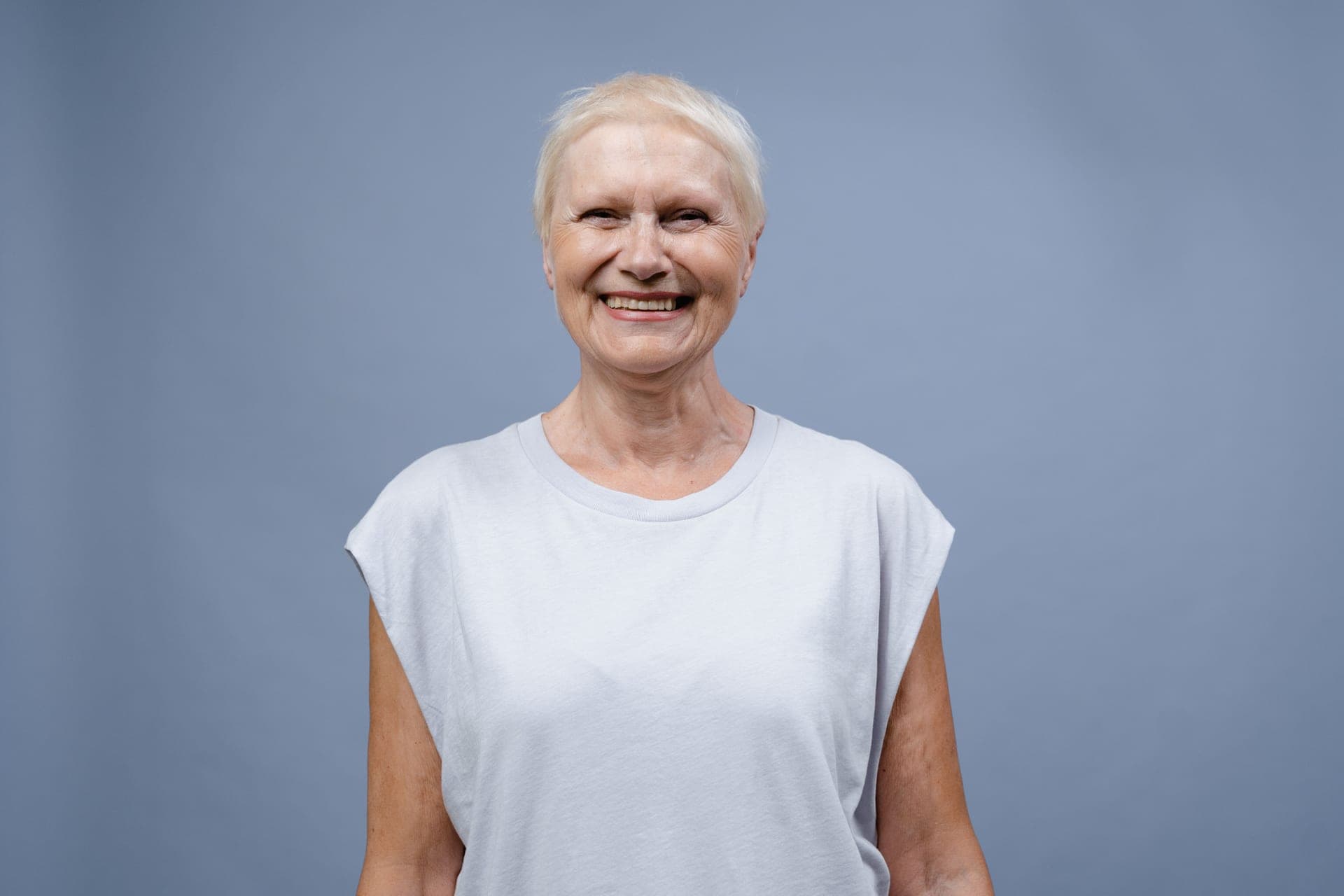
A smiling senior woman with short white hair, photographed against a plain studio backdrop

Short answer

On mature skin, a satin or demi-matte finish beats both extremes. A dewy finish reflects light out of every dip in the surface, so it emphasizes texture; a flat matte needs a harder film and shows every dry patch. Satin gives enough light return to avoid looking flat without highlighting what you would rather not highlight.

By Brijon M. · Last updated October 2, 2026

Our picks at a glance

Our picks at a glance, ranked. Select a row to read that product's full write-up.
#ProductBest forPrice
1
A plain white cosmetic bottle on a neutral beige background

Clinique Even Better Makeup SPF 20

The most useful finish on a mature face in the most available formula.

Best satin finish
2
A plain white cosmetic bottle on a neutral beige background

L'Oréal Paris Age Perfect Radiant Serum Foundation with SPF 50

The way to get a luminous look without the dewy penalty: the finish is radiant but the layer is extremely thin, so there is less surface film to bounce light out of a line.

Best controlled glow
3
A plain white cosmetic jar photographed on a neutral studio background

Laura Geller Baked Balance-n-Brighten Color Correcting Foundation

Demi-matte achieved through a baked powder rather than through oil absorbers and a hard film, which is the distinction that matters.

Best demi-matte
4
A plain white cosmetic jar photographed on a neutral studio background

Ilia Skin Rewind Complexion Stick

A soft-matte rather than flat-matte finish in a stick format, so you get shine control in the T-zone without putting a mattifying film across the whole face.

Best soft-matte stick

Prices live on Amazon and change constantly, so this site does not print a number it cannot verify. Every button goes to the current listing.

Why this is hard over 50

Finish is the most consequential choice on a mature face and the least carefully discussed. The choice is usually framed as a style preference — glowy versus polished — when it is actually a question about how light behaves on an uneven surface.

A dewy finish reflects light specularly, meaning it bounces back in a concentrated direction, which is what reads as glow. That works beautifully on a smooth surface. On a surface with dips in it — fine lines, pores, crepiness — each dip catches and returns light from its own angle, which makes the dip visible. This is why a dewy foundation that looked wonderful at 35 can look busy at 65 on exactly the same person.

A flat matte finish scatters light diffusely, which hides texture well in principle. The catch is how matte is achieved: oil absorbers and a harder, more film-forming formula. Both of those emphasize dryness, and a hard film cracks along a crease. So matte solves the texture problem and creates two new ones.

Satin sits between them. Enough light return that skin does not look dead, enough diffusion that texture is not picked out, and no need for the oil absorbers or the rigid film. That is why almost every pick on this site that does not have a specific reason to be elsewhere is satin or demi-matte — the format comparison in serum versus liquid points the same way for the same reasons.

The decision table

CriterionDewySatin / demi-matteFlat matte
Effect on fine linesEmphasizes — light bounces out of each lineNeutral — diffuses without flatteningHides at first, then the film cracks along them
Effect on visible poresEmphasizes — a pore is a dipNeutral to softeningGood, until oil lifts it at the pore rim
Effect on dry patchesGood — keeps them looking hydratedGoodPoor — reads papery and highlights flakes
Oil controlNone. Reads as shine within hours on oily skinModerate; a little powder in the T-zone finishes itThe best of the three, by design
Wear timeShortestGoodLongest
Who it suits over 50Dry skin with fairly smooth texture; or the cheekbones onlyAlmost everyone — the defaultGenuinely oily skin, in the T-zone, with hydration elsewhere
PhotographsCan read oily under flashReliableCan read flat and show texture at the edges

The picks in full

A plain white cosmetic bottle on a neutral beige background
Best satin finish

Clinique Even Better Makeup SPF 20

liquid foundation · Mid price band

A lightweight liquid with medium coverage, a natural finish and a wide shade range.

The most useful finish on a mature face in the most available formula. Natural-to-satin, medium coverage, no oil absorbers and no longwear film — so it neither highlights texture nor cracks. If you have been bouncing between dewy and matte and disliking both, this is the finish you were missing.

How it handles

Pump bottle.

What to know

On very dry skin a natural finish can read slightly flat by late afternoon. Moisturize properly underneath.

A plain white cosmetic bottle on a neutral beige background
Best controlled glow

L'Oréal Paris Age Perfect Radiant Serum Foundation with SPF 50

serum foundation · Drugstore price band

A fluid serum-foundation with light-to-medium buildable coverage, a luminous finish and SPF 50.

The way to get a luminous look without the dewy penalty: the finish is radiant but the layer is extremely thin, so there is less surface film to bounce light out of a line. Used sheer on dry-to-normal skin it gives the glow people want from dewy with much less of the texture-emphasis that normally comes with it.

How it handles

Pump bottle — no twisting and no shaking, and it dispenses with one press from either hand.

What to know

On genuinely oily skin it still reads as shine by afternoon. It needs powder in the T-zone.

A plain white cosmetic jar photographed on a neutral studio background
Best demi-matte

Laura Geller Baked Balance-n-Brighten Color Correcting Foundation

powder foundation · Mid price band

A baked powder foundation that goes on creamy and sets demi-matte, with buildable light-to-medium coverage.

Demi-matte achieved through a baked powder rather than through oil absorbers and a hard film, which is the distinction that matters. It diffuses light at the surface so texture softens, without the papery dry-down a conventional matte liquid gives. For anyone who wants matte for shine control but has been burned by what matte does to dry skin, this is the way to get it.

How it handles

A pan in a compact — nothing to pump, no cap to twist and nothing to spill. Applied with the supplied sponge or a brush.

What to know

Over an unmoisturized dry patch it still reads dry. Shade consistency across the range is reportedly uneven.

A plain white cosmetic jar photographed on a neutral studio background
Best soft-matte stick

Ilia Skin Rewind Complexion Stick

foundation stick · Premium price band

A complexion stick with buildable coverage and a soft-matte finish.

A soft-matte rather than flat-matte finish in a stick format, so you get shine control in the T-zone without putting a mattifying film across the whole face. On combination mature skin, using a soft-matte stick in the center and nothing at the edges is more effective than any single all-over finish.

How it handles

Twist-up stick with a slim barrel — precise, but it needs more finger control than a wide stick.

What to know

The slim barrel needs more finger control than a wide stick, and a matte finish is less forgiving on dry patches.

Which should you pick?

Dry skin, fairly smooth texture: dewy or a controlled glow. You have the surface for it and the hydration benefit is real.

Dry skin, visible texture: satin. Dewy would pick out the texture and matte would pick out the dryness.

Oily skin: satin all over, with powder in the T-zone — not a flat matte everywhere. Full detail on the oily skin page.

Visible pores: satin or soft-matte on the pore area over a blurring primer. Never dewy on the nose.

Crepey under-eye: nothing reflective near it. A satin or matte concealer, set with the smallest possible amount of fine powder.

For a photograph: satin. Dewy reads as oily under flash, flat matte reads as dead and picks out texture at the edges of the face.

The hybrid approach, which is what most people end up at: satin base everywhere, a touch of something luminous on the top of the cheekbones only, and powder on the nose. The glow goes where the surface is smoothest and the light is flattering.

Where the finish myth comes from

The advice to use a dewy finish on mature skin is everywhere, and it is not nonsense — it comes from a real observation. Dry, flat, powdery skin looks older than hydrated skin does, and for decades the dominant base finish was a heavy matte powder, so 'add glow' was genuinely good corrective advice.

What has changed is the available formulas. The satin finishes now on the market deliver the hydration benefit without the specular reflection, which is the specific part of dewy that causes trouble on an uneven surface. The advice stuck around after the thing it was correcting stopped being the main problem.

The other source of confusion is that professional makeup for photography and film genuinely does use more luminosity, because studio lighting is controlled and usually diffused. In diffused light, glow reads as skin quality. In overhead daylight or an office ceiling light, the same finish reads as texture, because the light is coming from a single direction and every dip casts its own shadow.

The practical rule: judge any base in the light you actually live in, by a window, after a few hours of wear. Not under shop lighting and not immediately after application.

Questions people ask

Is dewy or matte foundation better for mature skin?

Usually neither — a satin or demi-matte finish is the right answer. Dewy reflects light out of every dip in the surface and emphasizes texture; flat matte needs a harder film and oil absorbers, which emphasize dryness and crack along creases.

Does a dewy finish make wrinkles look worse?

It can. A dewy finish bounces light back in a concentrated direction, so each fine line and pore catches and returns light from its own angle, which makes the dip visible. On smooth skin it looks wonderful; on textured skin it reads as busy.

Why does matte foundation age my skin?

Because of how matte is achieved: oil absorbers that pull at a surface already short of oil, and a harder film that cracks along expression lines. The finish itself hides texture well — it is the formula required to produce it that causes the problem.

What finish is best for photographs over 50?

Satin. Dewy reads as oily under flash and flat matte reads dead while picking out texture at the edges of the face. Use a tinted rather than translucent powder if you are photographing with flash.

Can I wear a dewy finish if my skin is oily?

On the cheekbones, yes. Across the whole face it will read as shine within a couple of hours. Satin base, luminosity only where the surface is smoothest.

Where this comes from

How this page was put together. Picks are chosen by reading formulas, ingredient lists, packaging and dispensing design, and the reported experience of people with mature skin. Primer & Poise does not operate a laboratory, does not run a tester panel, and does not claim professional cosmetology, esthetics or medical credentials. Where a figure or a claim could not be verified, this page says so instead of filling the gap. Read the full selection method.

Sources