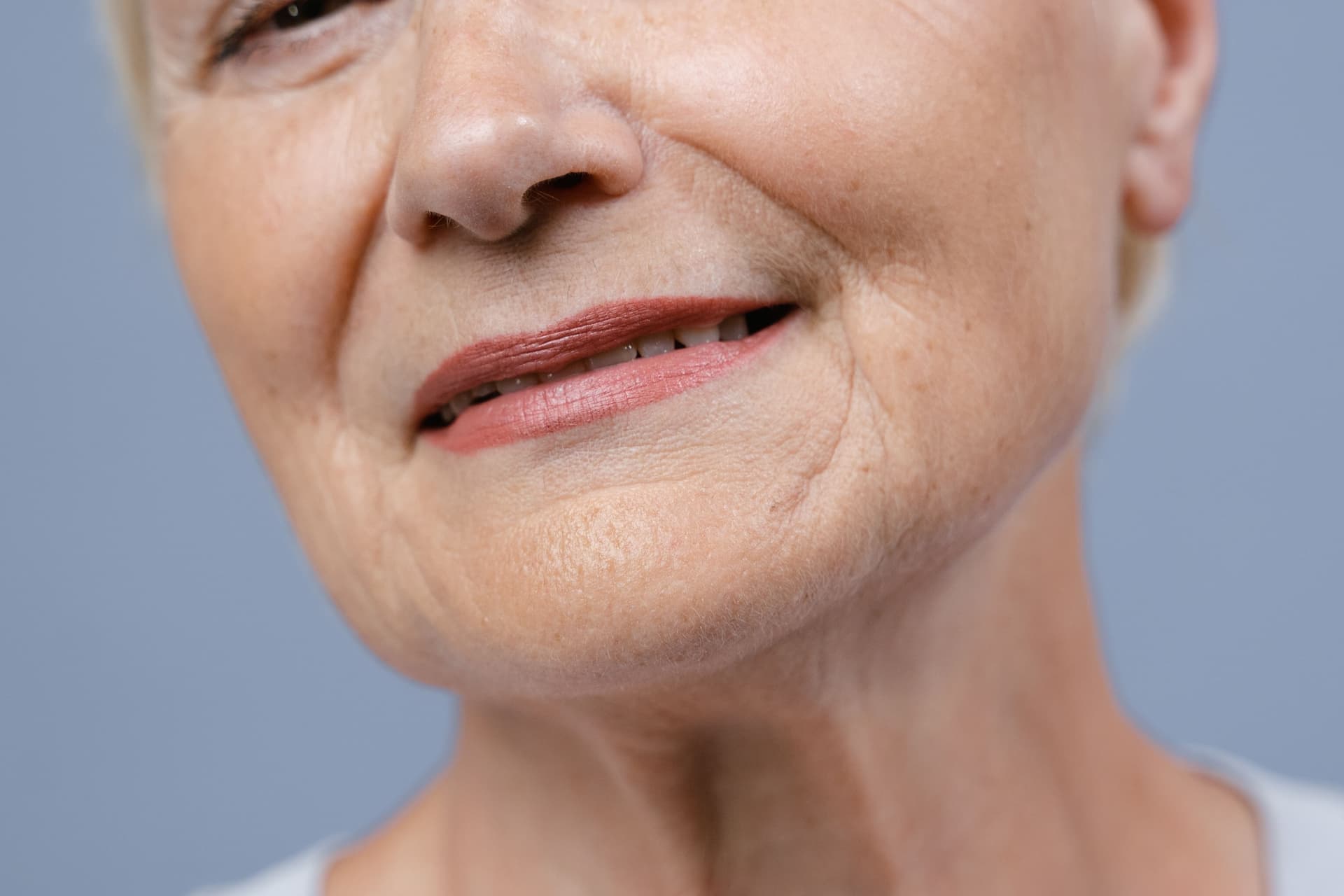
Coverage is the one base decision where instinct reliably points the wrong way. The more you dislike what you see, the more coverage you reach for, and on mature skin more coverage frequently makes the face look worse — not because of the color but because of the quantity. Every extra gram of product is extra material available to run into a line, crack along a fold or gather at a pore rim.
The useful way to think about it is area. Look at your bare face in daylight and ask what proportion of it actually needs covering. For most people the honest answer is a few square centimeters: a patch of redness either side of the nose, two or three spots on the cheekbones, some shadow under the eye. That is a targeted problem, and a whole-face medium-coverage foundation is a solution shaped wrongly for it.
The alternative — light coverage everywhere plus concealer on the few places that need it — puts less total product on the face, covers the problem areas better than a foundation would, and leaves the rest of your skin looking like skin. It is also usually cheaper, because concealer lasts a long time when you only use it where it counts.
Full coverage still has a place, and it is worth naming rather than dismissing: widespread pigmentation, significant rosacea, melasma across the cheeks. When the uneven area is most of your face, treating it area-by-area stops making sense and a full-coverage base is the right tool — chosen hydrating rather than matte, and applied thin.