This question usually gets answered with a position rather than an analysis — either everything expensive is a markup or you get what you pay for. Neither is true, and the useful version of the answer is category by category, because the gap between a drugstore product and a premium one is enormous in some categories and almost nonexistent in others.
What premium reliably buys, first. Shade range is the clearest case: extending a foundation to forty shades instead of twelve is a genuine cost that a brand either absorbs or does not, and over 50 it matters more than it did, because skin tone shifts and the neutral you used to wear may no longer exist in a twelve-shade line. A foundation that suits your skin in a shade that does not match it is not a usable product.
Second, powder milling. How finely a loose powder is ground is a real manufacturing variable, and it is the one that decides whether powder sits invisibly or records as a dry, dusty patch in a line. This is the single category where the difference is most visible on mature skin specifically, because a coarse powder is punished by texture in a way it is not punished by smooth young skin. It is also the category where you use the least product per application, so the cost per day of a premium powder is low.
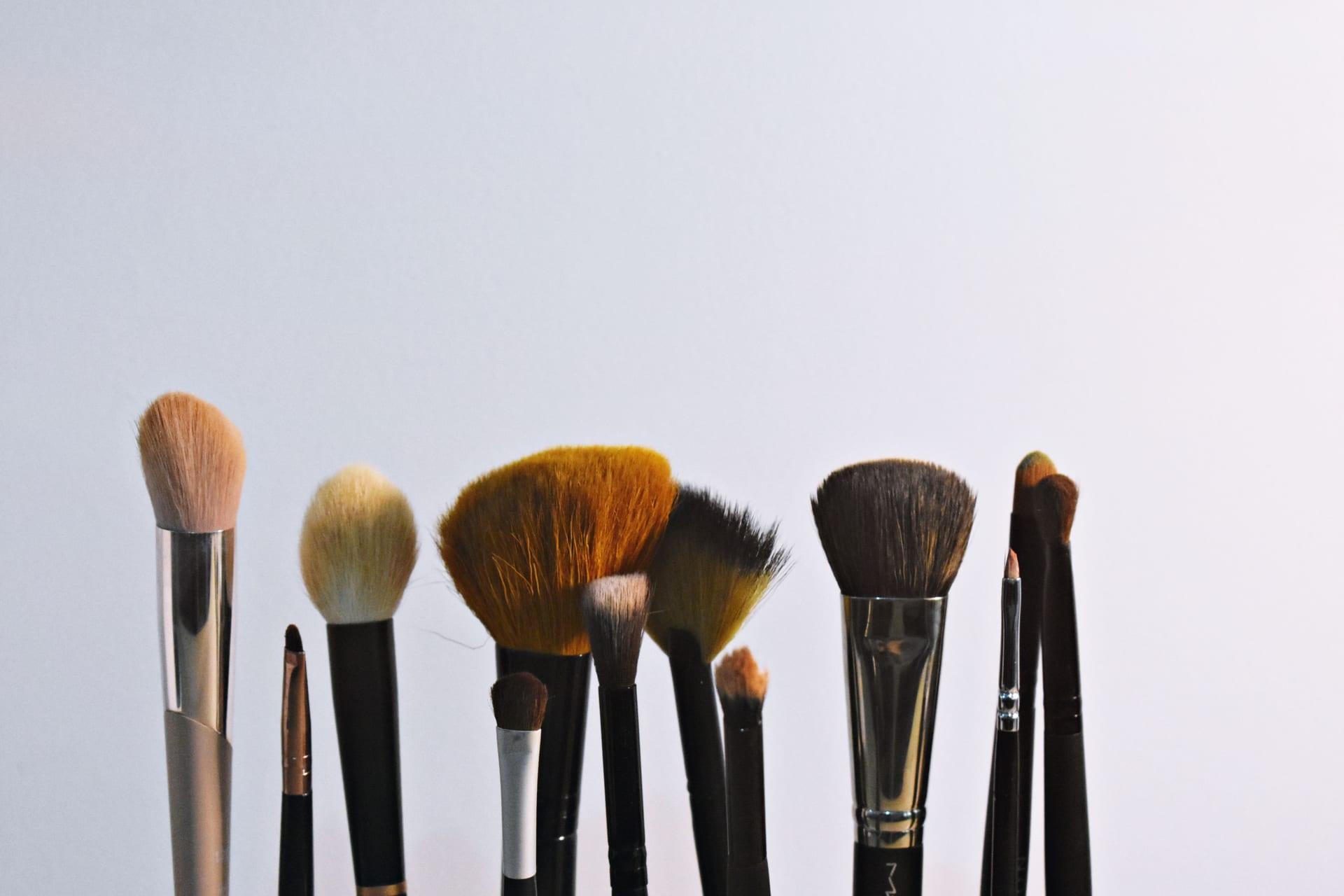
Third, applicator and container engineering. A pump that meters reliably, a wide barrel you can hold in a fist, a click pen that does not need a lid, a supported grip designed for reduced strength — these cost money to design and tool, and they are the difference between a product you can use and one you cannot. This is the category where premium most often earns its price for this audience, and it is almost never the reason anyone buys premium. The product-by-product version of that argument is on best luxury foundation for mature skin.
What premium mostly does not buy. Liquid foundation performance has largely converged: drugstore serum foundations now come in pumps with SPF and a natural finish, and the formulation gap is far narrower than the price gap. Mascara is the clearest case of all — the mechanism that matters most for mature lashes is tubing versus traditional, and tubing exists at every price point. Brow pencils are a question of tip fineness and shade availability, both of which drugstore brands do adequately.
And one thing money never buys: fit. The most expensive foundation in the world is wrong for you if its finish is radiant and your skin has texture, and the cheapest one on the shelf is right if it is thin, natural and in your shade. Price is not a proxy for suitability, and on mature skin suitability is the whole game.