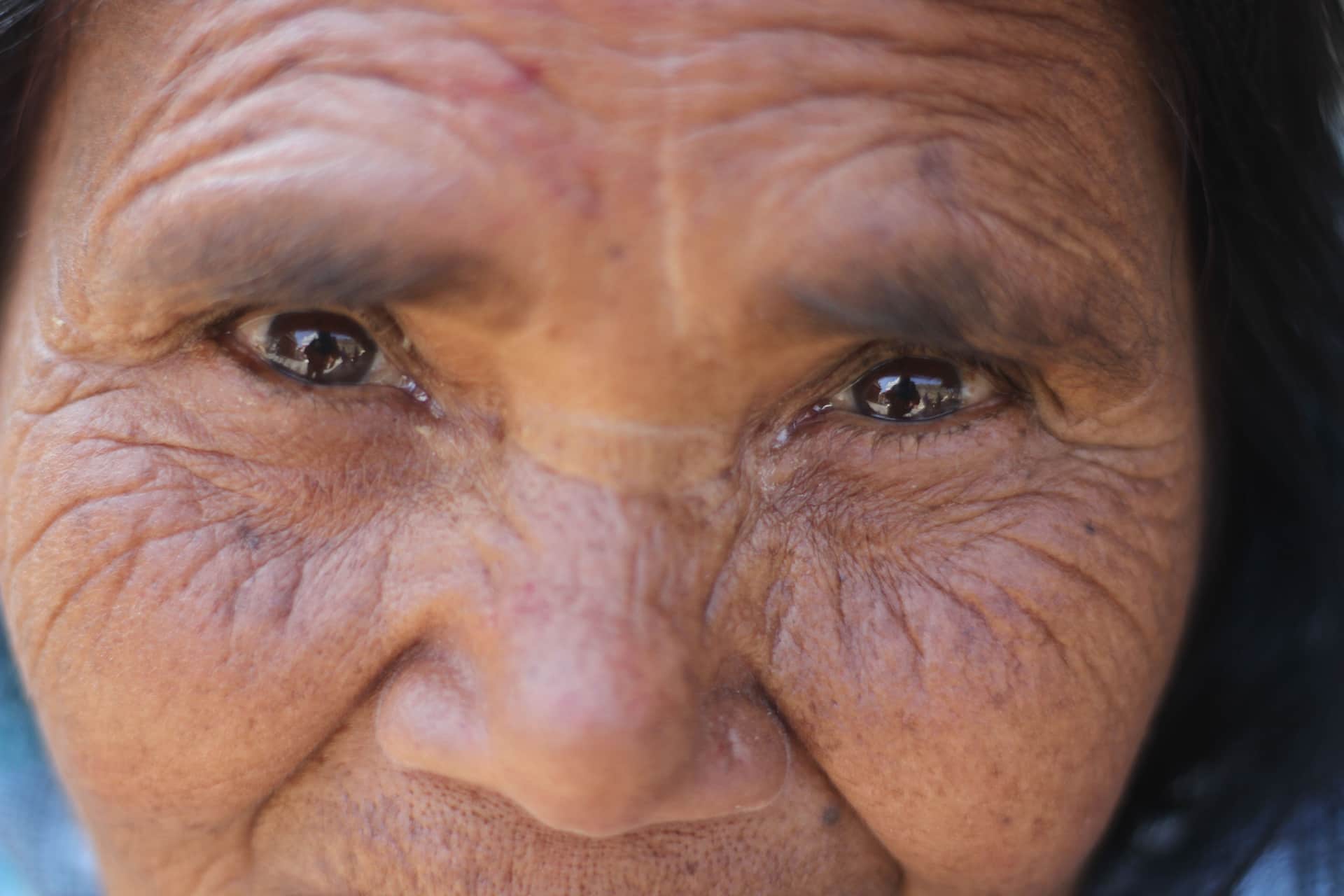
Eyeshadow on a mature hooded lid is the place where two separate problems meet, and most advice addresses only one of them.
The texture problem. Lid skin thins and becomes crepey, and crepey skin has many small facets that scatter light unevenly. A shimmer or glitter shadow adds reflective particles to that surface, and every facet catches one — so the texture becomes more visible, not less. This is exactly the same mechanism that makes a dewy foundation emphasize a textured cheek, and the answer is the same: matte and satin only.
The geometry problem. On a hooded lid, the mobile part of the lid folds under a fold of skin above it when the eye is open. Shadow placed in the natural crease — which is where every tutorial tells you to put it — is therefore hidden, and the eye reads as flat despite the effort. The fix is to place the darker shade just above the natural crease, so it sits on the visible part of the lid when your eyes are open.
Finding that line is simple: look straight ahead into a mirror with your eyes open and note where the fold sits. Everything below it is hidden; everything just above it is what people see.
The third issue is migration. Shadow on a lid that is crepey or slightly oily moves into the fold within the hour, which is where all that effort ends up as a single visible line. A thin eye base is not optional here — it is the difference between shadow that stays and shadow that gathers. See best eyeshadow primer for mature eyes.
And a general note on expectations: the goal on a hooded mature lid is soft definition, not a visible gradient. Dramatic shadow work depends on having a flat visible lid to work on, and asking a hooded lid to display a three-shade blend is asking for something the geometry will not allow.