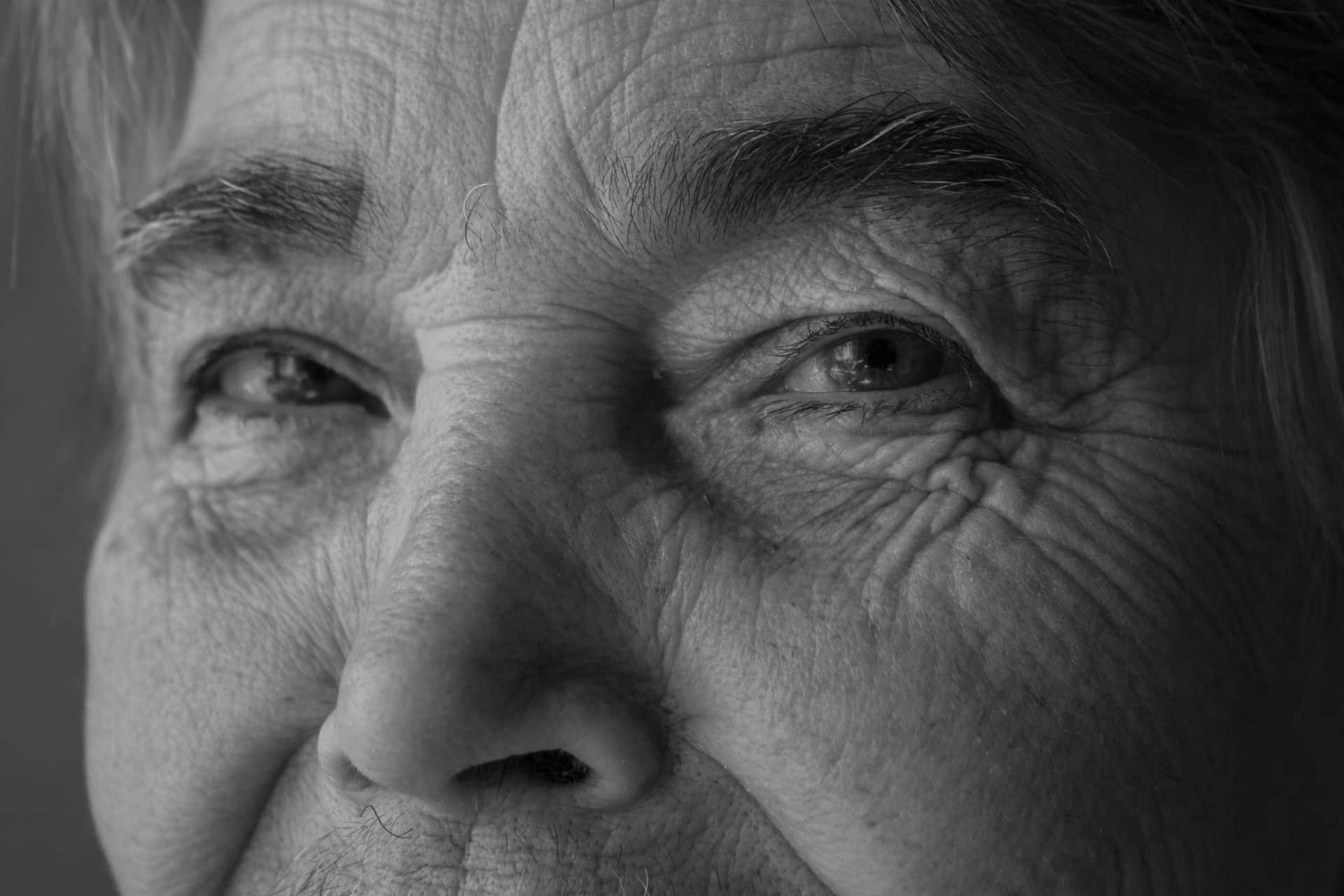
Hooded eyes are the most common structural change people notice around the eye after 50, and almost all liner frustration over 50 traces back to them. The mechanism is simple: the skin of the upper lid and the brow area relaxes, so when the eye is open the outer part of the mobile lid folds under a fold of skin above it. Anything drawn on that part of the lid is now hidden.
The specific experience is familiar. You close your eye, draw a neat line along the lash line and perhaps a small flick, open your eye, and the line has vanished or become a smudged sliver. The natural response is to draw a thicker line, which disappears equally and then shows up as a thick dark smear when you blink — and the eye ends up looking smaller rather than more defined.
There are two fixes and the first one is free. Draw with your eyes open, looking straight ahead into a mirror. That way you are drawing on the part of the lid that is actually visible when your eye is open, which is the only part worth drawing on. It feels awkward and it takes a few attempts, and it is the whole solution for most people.
The second is where the line goes: tight into the lash base, not above it. A line at the very root of the lashes sits in the one place a hood cannot cover, because it is below the fold. This is often called tightlining, and on a hooded eye it is the technique that works when nothing else does — it also fills the gaps between sparse lashes, which makes the lash line look denser at the same time.
Format matters too. Liquid liner needs a flat smooth surface and a steady hand, and a hooded mature lid provides neither — the skin has texture, it moves, and the fold interrupts the line. A firm gel pencil is the right tool: it grips, it draws on an uneven surface, and it can be built up in short strokes rather than one continuous sweep. Full technique in how to apply eyeliner on hooded eyes over 60.