Skip to content

Guides

Makeup with a tremor

A tremor is not a precision problem you can practice away. It is a problem you design around.

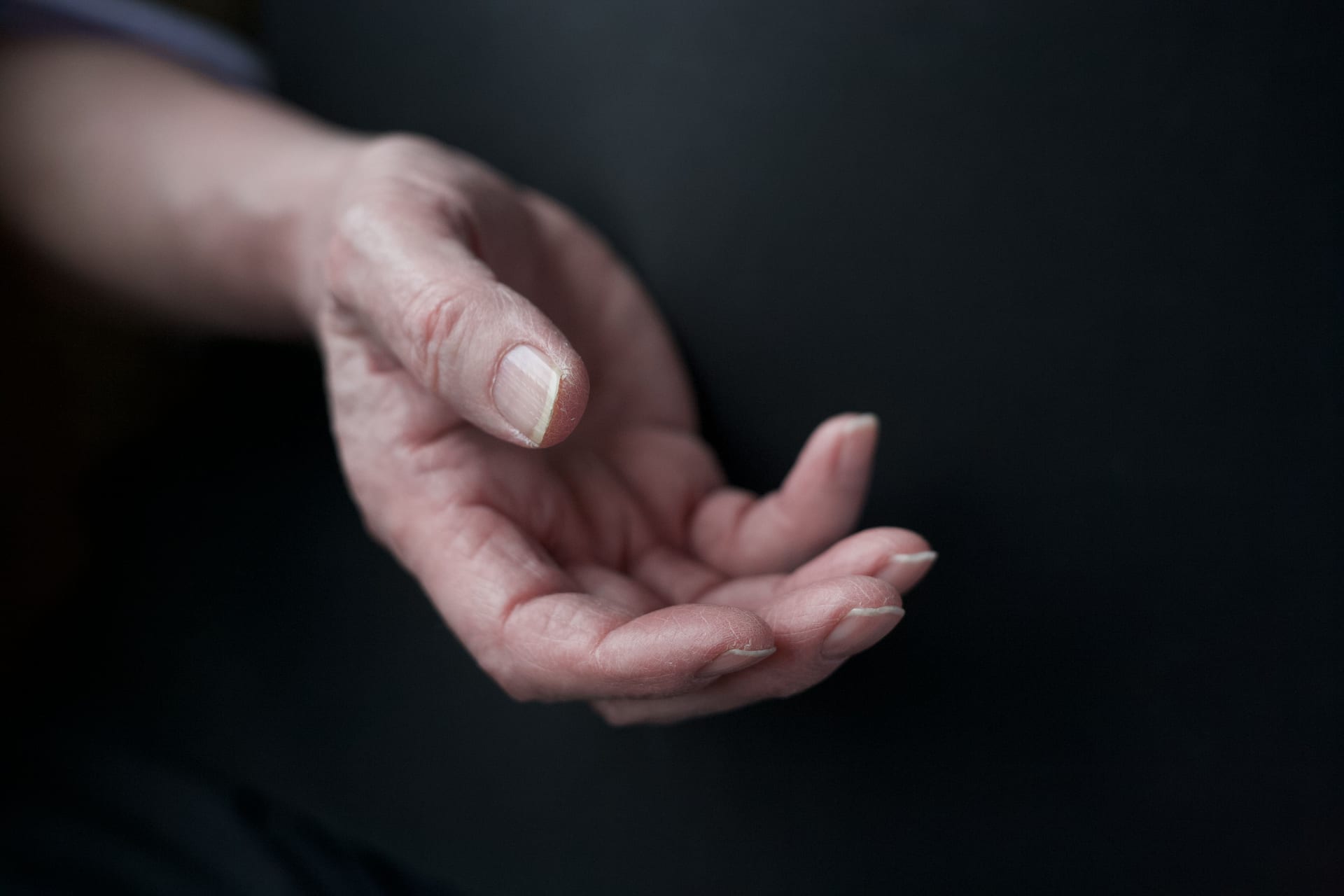
Close-up of an elderly hand against a dark background

Short answer

Stop asking the hand to be steady and change the conditions instead: sit down, brace both elbows on a table, bring your face to your hands rather than your hands to your face, and replace every long stroke with a series of short presses. Then switch the fussiest products for twist-up sticks and palm-held sponges, which need placement rather than precision. Those changes do more than any amount of practice, because they remove the requirement rather than meeting it.

By Brijon M. · Last updated October 17, 2026

Our picks at a glance

Our picks at a glance, ranked. Select a row to read that product's full write-up.
#ProductBest forPrice
1
A plain white cosmetic jar photographed on a neutral studio background

Ogee Sculpted Complexion Stick

The format answer to this problem.

Best base
2
A plain white cosmetic jar photographed on a neutral studio background

e.l.f. Cosmetics Color Correcting Stick

The cheapest and most forgiving way to do the one precise task worth keeping.

Best for spot work
3
Cosmetic products arranged in a simple display in neutral tones

EcoTools Bioblender Makeup Sponge

A sponge is the right tool here for a reason that has nothing to do with finish: it is palm-held, with no grip strength and no pinch required, so the hand holding it is relaxed rather than tensed — and a tensed hand tremors more.

Best tool
4
A plain white cosmetic jar photographed on a neutral studio background

Fancii Trifold LED Lighted Makeup Mirror

The purchase that makes the bracing possible, and therefore the one that changes the most.

Best mirror

Prices live on Amazon and change constantly, so this site does not print a number it cannot verify. Every button goes to the current listing.

Why this is hard over 50

A tremor is amplitude plus timing, and neither responds to trying harder. What it does respond to — reliably, and more than most people expect — is mechanical support and shorter movements, because the distance your hand travels unsupported is what determines how far off target it can get.

Bracing is the single biggest change, and it is free. An unsupported arm held up in front of your face has your whole shoulder and elbow contributing movement. The same hand with the elbow planted on a table has only the wrist and fingers contributing, which cuts the amplitude of a tremor substantially before you have bought anything. Two elbows braced is better than one.

Shorter strokes are the second. Error accumulates along the length of a stroke, so a single long sweep of liner is the hardest possible ask and twelve small presses covering the same line is among the easiest. Nearly every makeup technique that is usually taught as one movement can be done as a series of small ones, with a better result.

Bring your face to your hands. Most people hold the product still and move the face toward it, or hold the face still and reach. Resting both elbows on a table, bringing your forehead down toward the braced hands and working from there is more stable than either, and it is also the position that lets you look down into a mirror — which has independent benefits for eye makeup.

Format matters more than formula. A twist-up stick drawn onto the face has no dispensing step, no second container, and no requirement to meter anything: you touch it to the skin and move. A palm-held sponge needs no grip strength and no pinch. A pump bottle gives a repeatable dose where a tipped bottle gives whatever comes out. These are small differences individually and a different morning collectively.

What to look for in the products, then. Twist-up sticks over pots and brushes; palm-held tools over pinched handles; pumps over open necks and droppers; a mirror that stands on its own so neither hand holds it; and forgiving coverage, because a sheer product applied slightly wrong looks like nothing while a full-coverage one applied slightly wrong looks like a mark.

One thing worth saying plainly. A tremor that is new, worsening, or accompanied by other changes is a question for a doctor rather than a technique problem, and nothing on this page is medical advice. This page is about the makeup.

The picks in full

A plain white cosmetic jar photographed on a neutral studio background
Best base

Ogee Sculpted Complexion Stick

foundation stick · Premium price band

A creamy, oil-rich foundation stick with light-to-medium buildable coverage and a skin-like finish, built on jojoba, coconut and sunflower oils plus waxes.

The format answer to this problem. A creamy, oil-rich foundation stick with light-to-medium buildable coverage is drawn straight onto the face one-handed with no dispensing step at all — nothing to pour, pump or pick up, so there is no moment in which a tremor can go wrong. The oil-rich formula is also the most forgiving kind to blend out with a fingertip rather than a tool, and light-to-medium buildable coverage means a slightly uneven first pass reads as skin rather than as a mark.

How it handles

Twist-up stick, drawn straight onto the face one-handed with no dispensing step.

What to know

Premium price, and a stick deposits more product where it touches than a liquid does, so it wants pressing out rather than leaving as drawn. An oil-rich formula is the wrong direction for an oily T-zone, and a stick gives you one shade rather than a mixable one.

A plain white cosmetic jar photographed on a neutral studio background
Best for spot work

e.l.f. Cosmetics Color Correcting Stick

color corrector · Drugstore price band

A twist-up corrector stick sold in green, peach, lavender and yellow tones.

The cheapest and most forgiving way to do the one precise task worth keeping. It is a twist-up corrector stick, sold in green, peach, lavender and yellow, drawn straight onto the skin with no brush, no pot and no second hand needed — and spot correction is small-area work, which is the easiest kind to do with a tremor because the hand barely travels. Press, do not drag, and a fingertip tidies any overshoot. Drugstore price means a mistake costs nothing.

How it handles

Twist-up stick drawn straight onto the skin — no brush, no pot, no second hand needed.

What to know

A stick tip is wider than the smallest marks, so very small spots want the product taken onto a fingertip first. Choosing from four tones means buying on reasoning rather than a swatch, and a corrector needs a skin-tone layer over it to finish — the method is on [how to cover age spots with makeup](/guides/how-to-cover-age-spots-with-makeup).

Cosmetic products arranged in a simple display in neutral tones
Best tool

EcoTools Bioblender Makeup Sponge

tool · Drugstore price band

A biodegradable blending sponge with a tapered tip for the under-eye.

A sponge is the right tool here for a reason that has nothing to do with finish: it is palm-held, with no grip strength and no pinch required, so the hand holding it is relaxed rather than tensed — and a tensed hand tremors more. This one is a biodegradable blending sponge with a tapered tip, which means one tool handles both the press-the-base step and the detail work around the nose and under the eye without a brush changeover. Pressing with it is also the stroke this page recommends everywhere.

How it handles

Palm-held, with no grip strength required.

What to know

A small sponge holds less product and absorbs some of what you load on, so it takes more passes than a full-size one. It needs frequent washing and regular replacement, and a biodegradable material breaks down faster than a synthetic one — the routine is on [how to clean makeup brushes and sponges](/guides/how-to-clean-makeup-brushes-sensitive-mature-skin).

A plain white cosmetic jar photographed on a neutral studio background
Best mirror

Fancii Trifold LED Lighted Makeup Mirror

tool · Mid price band

A trifold lighted mirror with several magnification panels, including a high-magnification section.

The purchase that makes the bracing possible, and therefore the one that changes the most. It is a trifold lighted mirror with several magnification panels that stands on its own, so it sits on a table where you can work seated with both elbows planted and neither hand holding anything. Its own light matters as much as the magnification, because working in dim light makes anyone compensate with closer, more careful movements — which is the opposite of what a tremor needs.

How it handles

It stands on its own, so neither hand has to hold it.

What to know

Mid price for an accessory rather than a product, and it occupies counter space permanently. The high-magnification panels distort toward the edges and are for working rather than judging, so step back to a normal mirror for the finished result — more options are on [best makeup mirror for low vision](/easy-application/best-makeup-mirror-for-low-vision).

Step by step

  1. Sit down at a table, not at a bathroom mirror

    Standing at a wall mirror gives you nothing to brace against and asks your legs and torso to stay still as well. A chair at a table with a standing mirror on it changes the whole exercise: you are supported, your arms have somewhere to rest, and you can stay there long enough to work slowly. If the only mirror in the house is on a wall, a freestanding one is the highest-value purchase on this page.

  2. Brace both elbows, and keep your hands close to your face

    Elbows planted on the table, forearms more or less vertical, hands working close in. The shorter the unsupported span between your braced elbow and the product tip, the less room a tremor has to travel. For eye work, rest the heel of your working hand against your own cheekbone — your face is the steadiest brace available because it moves with you.

  3. Replace every long stroke with short presses

    Foundation: press with a sponge rather than sweeping. Liner: a dozen small dots and presses along the lash base rather than one line. Brows: short hair-like strokes rather than a drawn arc. Lipstick, if you wear it: dab from a stick rather than outlining. In every case the short version is both easier and the technique a makeup artist would use anyway, which is a useful coincidence.

  4. Use sticks for everything that comes in a stick

    Foundation, corrector, cream shadow and brow pencil all exist in twist-up stick form. A stick removes the dispensing step entirely — nothing to pour, pump, meter or pick up on a tool — so there is no moment where a tremor can spill or overshoot. You touch the product to the skin and move it, and if it goes slightly wide you press it out with a fingertip.

  5. Let the product be forgiving

    Sheer and buildable rather than full coverage. A sheer product applied imprecisely reads as nothing; a full-coverage one applied imprecisely reads as a mark that then needs correcting, which is a second precise task. The same logic applies to color: a soft brown liner slightly off is invisible, a black one slightly off is a line in the wrong place.

  6. Do the hardest thing first, and give yourself an exit

    Eye makeup before foundation, not after. If the liner goes wrong you can wipe it off and start again without destroying a finished base, and if you decide to stop you have lost nothing. Doing it in the other order means every mistake costs you the whole face, which is the thing that makes people give up on makeup rather than on one product.

Which steps to keep and which to drop

Keep: base, brows, mascara. These three do the most for how a face reads and all three tolerate imprecision well.

Keep: a stick corrector for two or three specific spots. Local work with a stick is among the easiest things on the list.

Make optional: eyeliner. It is the least forgiving product in the bag. Tightlining with short presses is the workable version if you want it — best eyeliner for older women has the formats that help.

Make optional: powder. A trace on the T-zone, pressed. Loose powder in a sifter jar is one of the likeliest things to spill, so a pressed format is worth the trade.

Drop: liquid felt-tip liner, winged anything, lower-lash liner. All three demand an unbroken precise stroke and none of them pay for the difficulty.

Drop: loose pigments and anything that needs tapping out of a jar. The spill risk is not worth what they add.

If the tremor is worse on some days than others

Have a short routine you can fall back to. Base, brows and mascara, in that order, takes four minutes and needs the least precision of anything in the bag.

Warm your hands first. Cold hands are less steady, and a minute under warm water before you start is free.

Work earlier rather than later if that is your pattern. Many tremors vary through the day; there is no reason to do the fussiest task at the worst hour.

Keep the products you use in one shallow tray rather than a bag. Rummaging in a bag is a dexterity task that happens before the makeup task.

Keep the fallback kit all in sticks. On a bad day, a stick base, a stick corrector and a brow pencil need no tools and no dispensing at all.

A tremor that is new or getting worse is a medical question, not a makeup one. Ask a doctor. Nothing here is medical advice, and no technique substitutes for a diagnosis.

Questions people ask

How do you apply makeup with shaky hands?

Change the conditions rather than the hand. Sit at a table, brace both elbows, keep your hands close to your face, and replace every long stroke with short presses. Then use twist-up sticks and a palm-held sponge instead of pots and brushes, because those need placement rather than precision.

Does bracing your arm actually help with a tremor?

Considerably. An unsupported arm has the shoulder and elbow contributing movement; with the elbow planted on a table only the wrist and fingers do. Resting the heel of your working hand against your own cheekbone helps again, because your face moves with you.

What makeup is easiest to apply with a tremor?

Anything in a twist-up stick — foundation, corrector, cream shadow, brow pencil — because there is no dispensing step to go wrong. Sheer and buildable coverage is also more forgiving than full coverage, which turns a small error into a visible mark.

Should I do eye makeup before or after foundation if my hands shake?

Before. If the liner or mascara goes wrong you can wipe it off and start again without ruining a finished base, and you have an exit if you decide to stop. Doing it afterward means every mistake costs the whole face.

Can I still wear eyeliner with shaky hands?

Yes, as a tightline made of a dozen short presses at the lash base rather than one drawn line. Skip liquid felt-tip liners and wings entirely — both demand a single unbroken stroke, which is the hardest possible ask.

Is a tremor something makeup technique can fix?

Technique makes makeup workable; it does not treat the tremor. A tremor that is new, worsening or accompanied by other changes is a question for a doctor, and nothing on this page is medical advice.

Where this comes from

How this page was put together. Picks are chosen by reading formulas, ingredient lists, packaging and dispensing design, and the reported experience of people with mature skin. Primer & Poise does not operate a laboratory, does not run a tester panel, and does not claim professional cosmetology, esthetics or medical credentials. Where a figure or a claim could not be verified, this page says so instead of filling the gap. Read the full selection method.

Sources