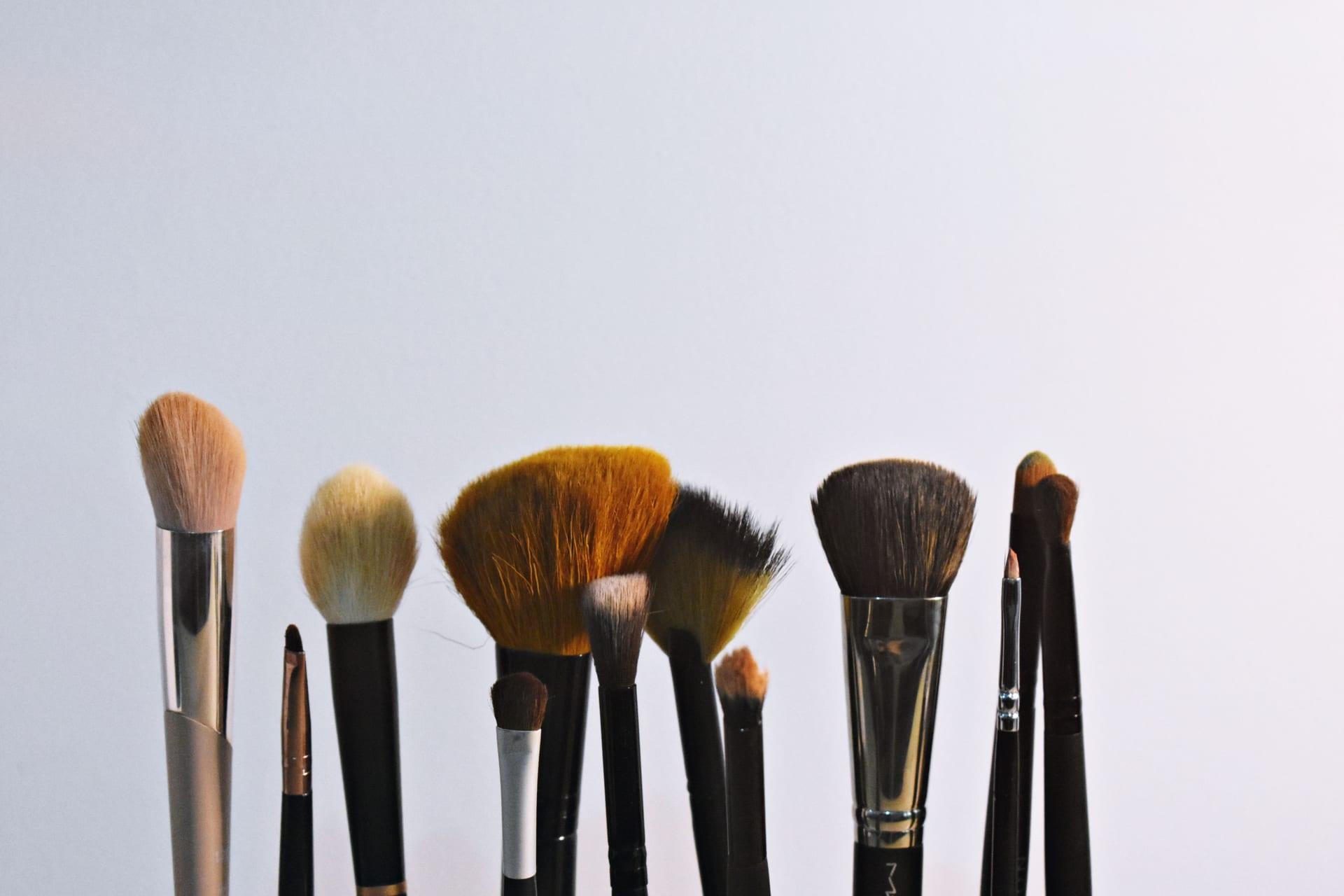
The difficulty in applying makeup with arthritic hands is mostly not where people assume. It is rarely the blending or the precision — it is the number of times you have to grip, twist, pinch, squeeze, aim and hold, and the fact that nothing on any product tells you which products ask for which.
So this guide starts with the two things that reduce the demand most, neither of which is a technique.
The setup. Sitting at a table with your forearms resting on it, with a standing lit mirror at eye level, and with every cap already off, changes what is physically possible. Standing at a bathroom mirror means your arms are unsupported for the entire routine, there is no magnification, and the light is coming from above — which casts a shadow in every line on your face so you cannot see what you are doing.
The containers. A twist-up stick has no dispensing step at all. A powder compact opens with a thumb and cannot spill. A pump delivers a measured dose from one flat press. A dropper requires exactly the pinch grip that is hardest; a pot requires a rotating lid grip and a separate tool; a squeeze tube gets harder as it empties. Those are facts about objects, they are easy to check in a shop, and they decide more than any formula does.
One boundary, stated plainly: arthritis is a medical condition and this is a makeup site. Nothing here treats or manages it. The general advice on protecting joints during daily tasks comes from arthritis organizations and from occupational therapists, and both are better sources on that than any beauty publisher — CreakyJoints has practical hair and makeup guidance written with that in mind.
Two adjacent pages cover what this one does not. Arthritis is a strength and grip problem; if yours is a control problem instead, how to apply makeup with shaky hands has the bracing positions and stroke lengths — and the washing routine that keeps brushes soft enough not to drag is on how to clean makeup brushes and sponges.