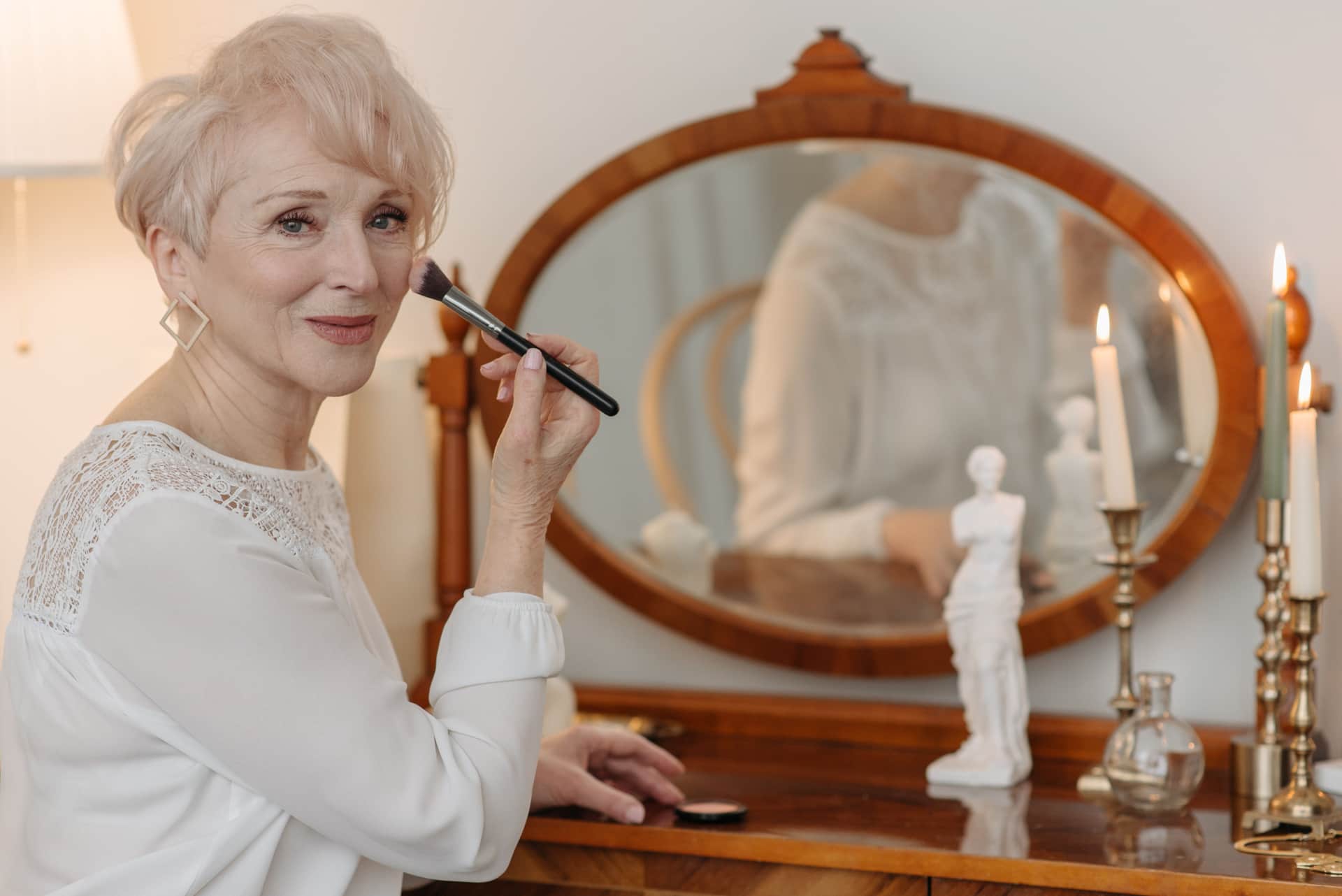
Most makeup advice adds. This page subtracts, because for a lot of people in their seventies and eighties the binding constraint is not which product is best but how many products a routine can reasonably contain — and how much grip, aim and close vision each one demands.
The honest answer is that four products produce a finished face. A tinted base evens out tone. A concealer handles the two or three places that need covering. Something on the brows frames the eye, which does more than anything else on this list. And mascara defines the lash line. That is it. Primer, powder, setting spray, bronzer, highlighter, liner and shadow are all optional, and several of them actively work against mature skin.
Subtracting is not a compromise. A thin base plus targeted concealer looks better on mature skin than a full face of anything, because the volume of product is what settles into lines. Skipping powder avoids the single most aging product in a makeup bag. And a four-product routine is one you will actually do every day, which matters more than a seven-product routine you do twice a week.
The second principle is format before formula. If your hands are less reliable or your close vision has changed, the question is not which foundation is best but which base you can get out of the container and onto your face. A twist-up stick and a powder compact both have no dispensing step at all. A tubing mascara removes with warm water rather than solvent and rubbing. A brow gel needs one stroke rather than twenty drawn hairs. Those choices make a routine possible.
Everything on this page is a real, currently-sold product, and every entry says what the container asks of you. If the limiting factor is specifically grip and joint pain, best makeup for arthritic hands goes further; if it is close vision, start with best makeup mirror for low vision, which does more than any cosmetic.