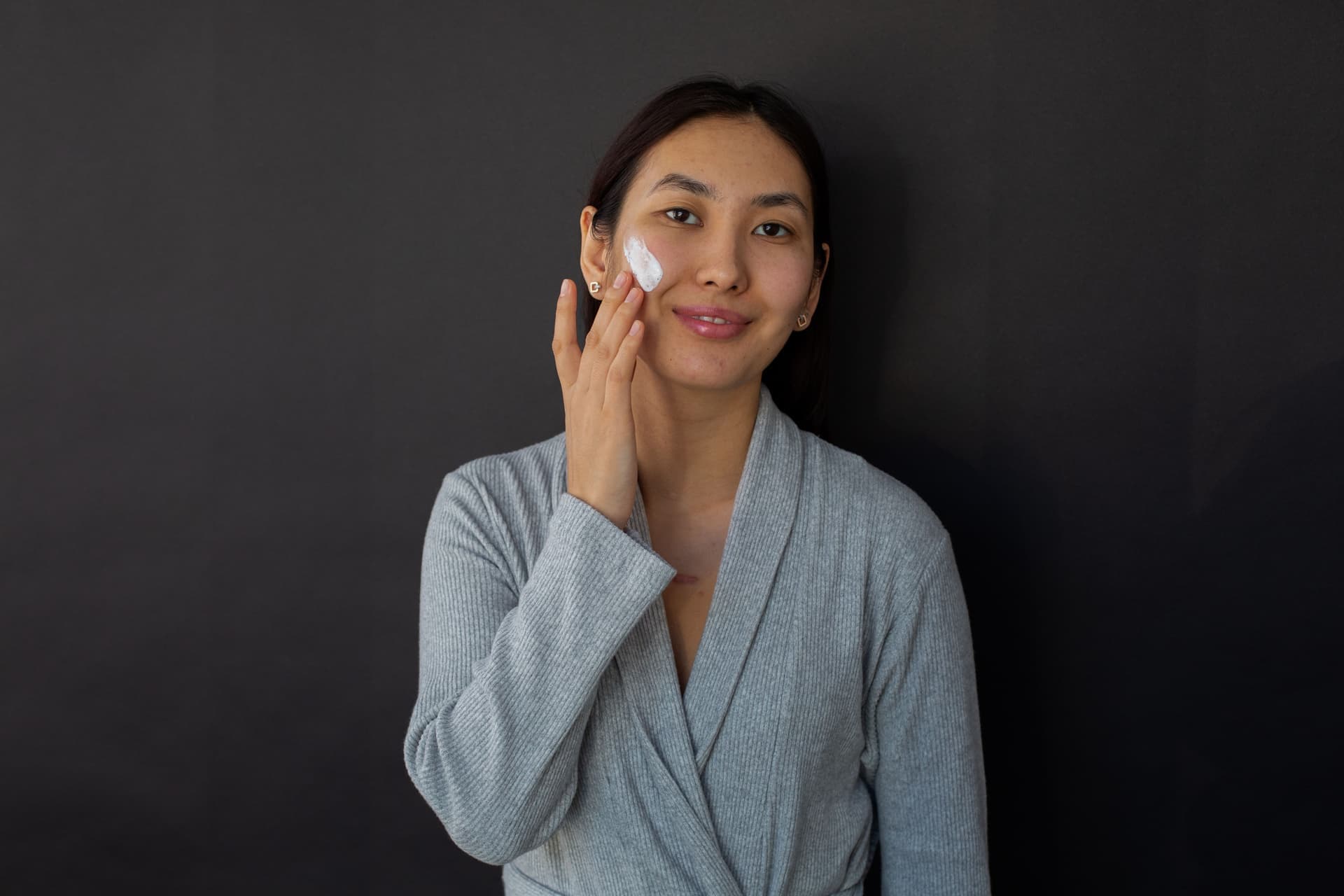
This is the page where the category's advertising is furthest from the mechanism, so it is worth being blun. No primer fills a wrinkle. A silicone-elastomer film sits in and across a fine line and scatters light, which makes the line read softer because the shadow in it is less defined. That is useful and it is temporary, and it is a much smaller claim than the words 'line-filling' imply.
What helps more, and gets mentioned less, is hydration. A fine line in dehydrated skin is a sharper channel with drier, less plump skin either side. Rehydrate the area properly and the same line is shallower and less distinct — and critically, the skin stops drinking water out of your foundation, which is the thing that makes foundation go patchy and settle in the first place.
The third factor is what goes on top, and it is the one you control most cheaply. A thick, rigid foundation over any primer will crack along a crease by mid-afternoon no matter what you put underneath. A thin, flexible one will not. If fine lines are your complaint, changing the foundation does more than adding a primer — best foundation that doesn't settle into wrinkles covers that side.
Where a blurring primer genuinely earns its place is on a specific area — the two or three lines that actually bother you, usually at the outer eye or between the brows. Applied there, thin, patted on and left to set, it does real work for a few hours. Applied across your whole face it is a thick extra layer under your base, which makes cracking more likely rather than less.