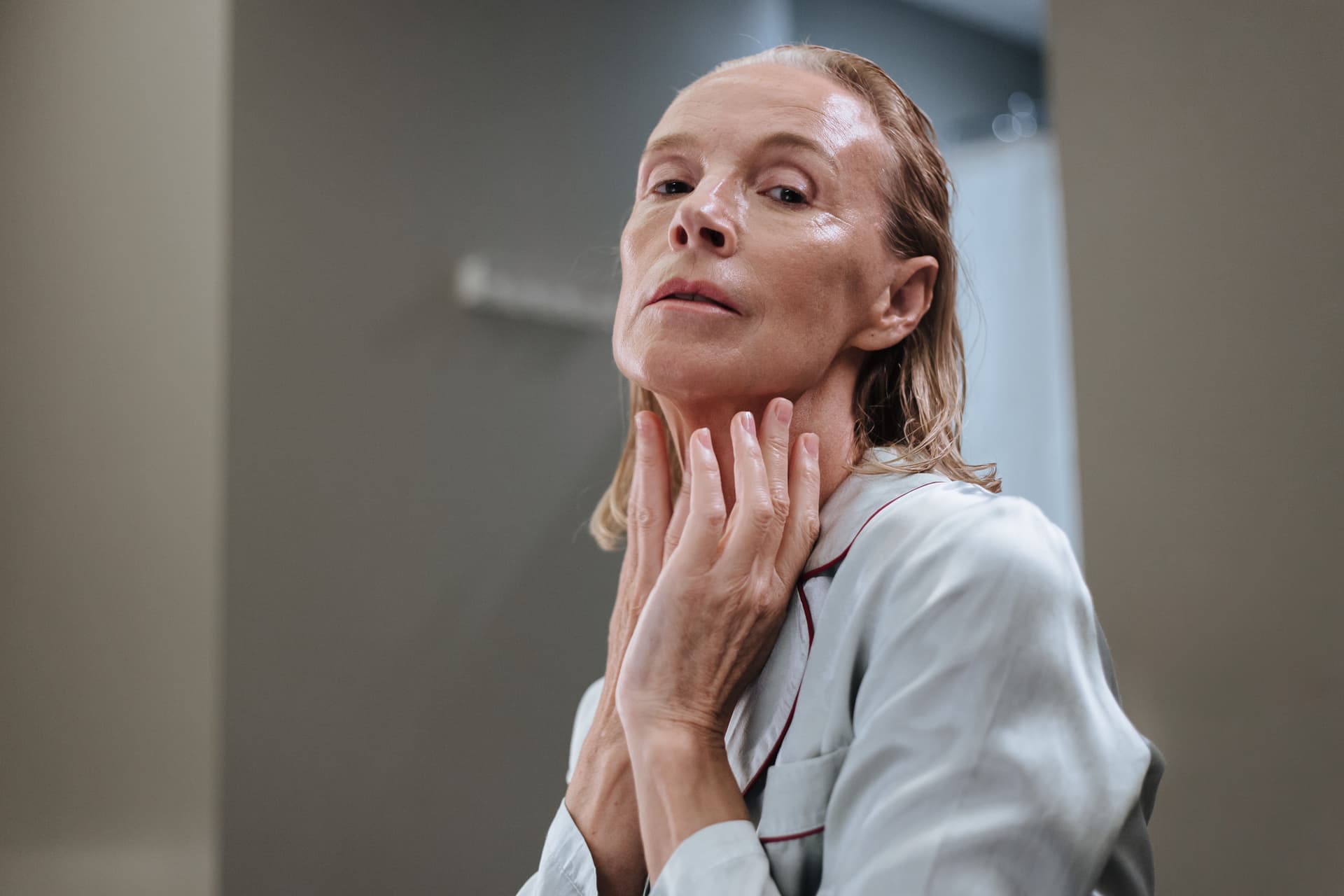
Primer is the most over-sold step in a makeup routine. The promise — longer wear, smoother skin — is vague enough that almost any product can claim it, and on mature skin an unnecessary extra film is not neutral: it is another layer to crack along your smile lines.
So it helps to be literal about what is in the bottle, because there are only three mechanisms. Blurring primers are silicone-elastomer films that sit across an uneven surface and scatter light, which softens how a pore or a fine line reads. Grip primers are tacky polymer films that give foundation something to hold onto, which genuinely extends wear where makeup slides off. Hydrating primers are moisturizers with better marketing — they stop your skin drinking the water out of your foundation, which is why foundation goes patchy on dry skin.
Nothing in that list is 'fills your wrinkles', and you should treat any product sold on that claim with suspicion. A blurring primer makes a fine line read softer by scattering light at its edges; it does not fill the line, and the effect fades over a few hours. That is still worth buying if texture is your complaint — it is just not what the advertising implies.
What this means practically is that the right primer follows directly from your actual complaint, and the wrong primer makes things worse rather than doing nothing. A mattifying primer on dry cheeks makes them papery. A blurring primer across your whole face is a thick film under your foundation. A hydrating primer on oily skin is one more thing to slide.
One more thing worth saying up front, because it is the most useful sentence on this page: a great many people over 50 do not need a primer at all, and a good moisturizer plus two minutes of patience solves the problem they bought one for. Do you need primer over 50 is the honest version of that conversation.