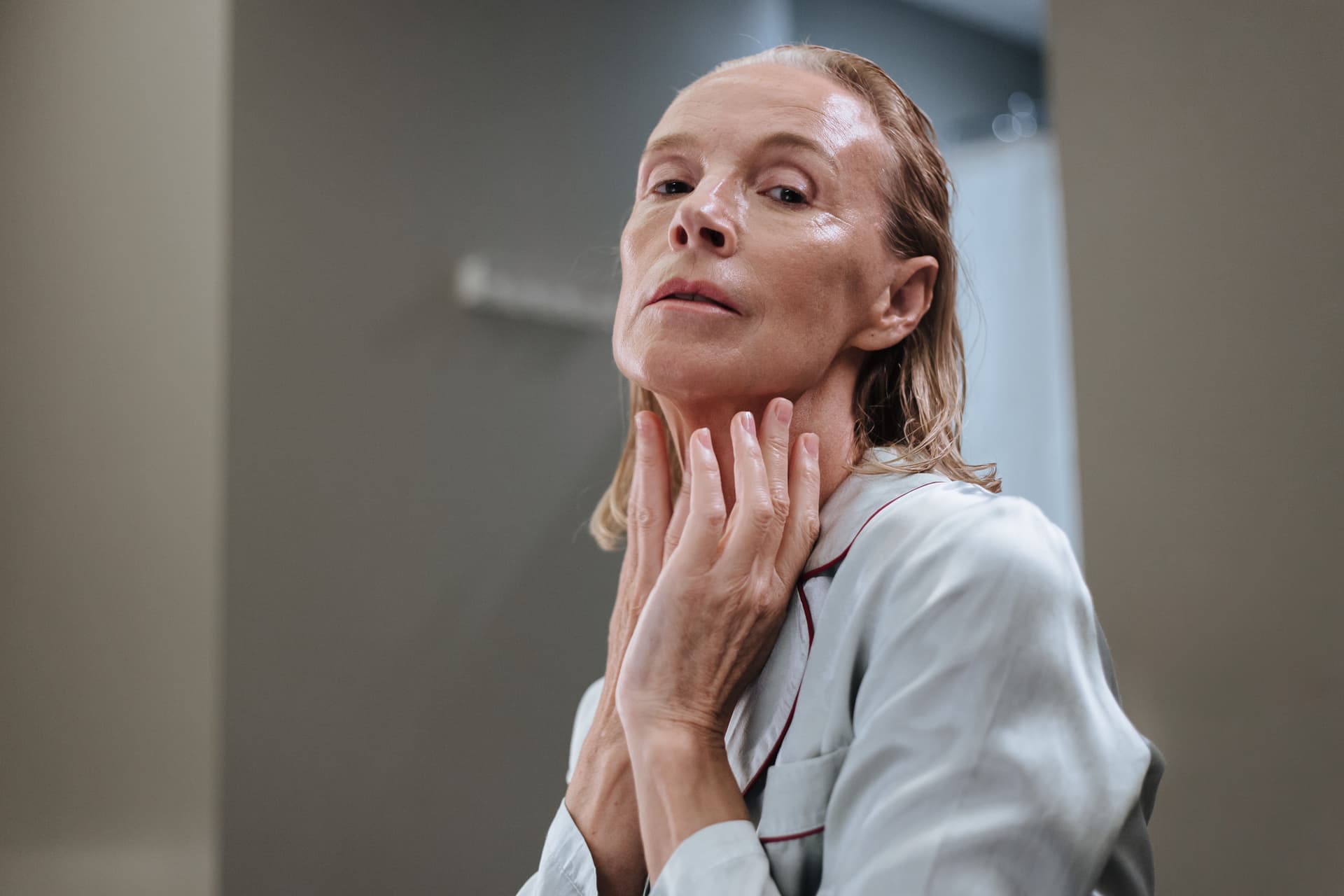
Dry skin makes foundation behave badly in a specific, diagnosable way: the product grabs. It clings to the rough patches, goes patchy over the smooth ones, and the areas that absorbed most look darker than the areas that absorbed least. That is an absorption problem, and the answer is to put something between your skin and the foundation that your skin cannot drink.
A hydrating primer is one way to do that. The useful ones contain both a humectant and an emollient — glycerin or hyaluronic acid to hold water, plus an oil or a fatty substance to stop the water leaving. A humectant on its own is the common formulation shortcut and on dry mature skin it can actually leave the surface feeling tighter, because it pulls water up with nothing holding it in.
The other way is simply a better moisturizer, used properly, with two minutes to absorb. This genuinely works for a lot of people and it is worth trying before you buy another product. The reason a primer sometimes beats it is adhesion: a primer is formulated to be a surface for makeup to sit on, while a moisturizer is formulated to sink in. If your foundation grabs even over a good moisturizer, that is when a hydrating primer earns its place.
What is certainly wrong for this skin is anything mattifying, oil-free, or sold on shine control. Those products are built to absorb sebum, and dry mature skin is short of sebum already. They produce a tight, papery surface that shows every bit of texture — the exact opposite of what you were trying to fix. The mattifying versus hydrating comparison sets the two against each other properly.