Skip to content

#AdWe earn commission on qualifying purchases made through links on this page. It never changes what we pick or how it ranks. How this works.

Foundation

The format you can use one-handed

A stick has no pump to press, nothing to pour and nothing to spill. On a bad hands day that is the whole argument.

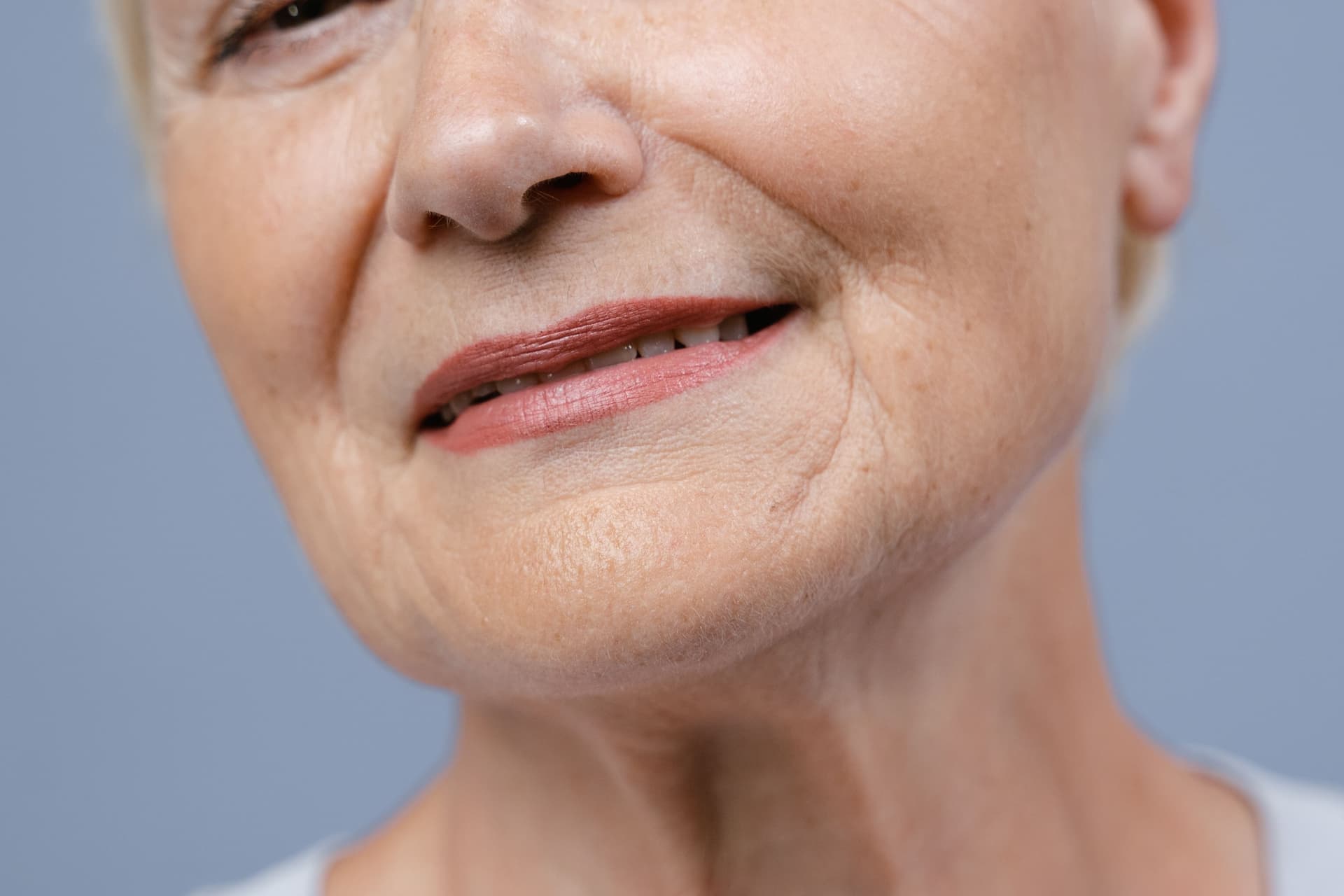
Close detail of an older woman's mouth and skin, showing natural lines and texture

Short answer

A foundation stick is the easiest base format to use with reduced grip or dexterity: you twist it up once and draw it straight onto your face, with no dispensing step and nothing to spill. Choose a balm-textured stick with a wide barrel, and blend it with a sponge pressed into the skin rather than a dragging brush.

By Brijon M. · Last updated October 2, 2026

Our picks at a glance

Our picks at a glance, ranked. Select a row to read that product's full write-up.
#ProductBest forPrice
1
A plain white cosmetic jar photographed on a neutral studio background

Westman Atelier Vital Skin Foundation Stick

The best-behaved stick for mature skin, for two reasons that are both about physical handling.

Best overall
2
A plain white cosmetic jar photographed on a neutral studio background

Bobbi Brown Skin Foundation Stick

The stick to buy if you need to cover something rather than even out tone.

Best coverage
3
A plain white cosmetic jar photographed on a neutral studio background

Ilia Skin Rewind Complexion Stick

The one here with a soft-matte rather than satin finish, which makes it the stick for combination skin that shines through the T-zone.

Best soft-matte finish
4
A plain white cosmetic jar photographed on a neutral studio background

e.l.f. Cosmetics Color Correcting Stick

Worth owning alongside any of the above, because the same format advantage applies to correction: you draw a thin line of green or yellow over a red patch and blend with a fingertip, with no pot to open and no brush to hold.

Best companion corrector
5
Cosmetic products arranged in a simple display in neutral tones

Bobbi Brown Long-Wear Cream Shadow Stick

Included for the same reason: a cream shadow stick means the eye step needs no brush, no palette and no precision, and it resists collecting in the crease of a hooded lid.

Best for a complete stick routine
6
Cosmetic products arranged in a simple display in neutral tones

Real Techniques Miracle Complexion Sponge

The companion that makes the format work.

Best tool to blend one

Prices live on Amazon and change constantly, so this site does not print a number it cannot verify. Every button goes to the current listing.

Why this is hard over 50

Most foundation reviews treat format as a matter of taste. For a lot of people over 60 it is a matter of whether the product gets used at all, and the stick is the format that removes almost every obstacle: no pump to press, no dropper to pinch, no tube to squeeze, nothing to pour, nothing to spill, and no second hand required. You take the cap off, twist once, and draw.

That is not only an accessibility argument, although it is a good one. A stick also happens to suit mature skin on the formula side. Stick foundations are emulsions held in a wax-and-oil base, which means they are rich in emollients — the exact thing dry mature skin wants — and they have no liquid phase, so there is nothing fluid to run downhill into a crease. You also place them only where you need coverage, instead of spreading a thin film across skin that did not need any.

The two things to watch are drag and edges. Drag is when the stick pulls at thin skin as you draw — a formula that is too firm, or a face that is too dry. Edges are what you get when you draw a stripe and do not blend the boundary, and on mature skin a visible edge is more obvious than an under-covered patch.

Both are solved the same way: a balm-textured formula rather than a firm one, applied in short strokes and then pressed out with a damp sponge. The one-handed application page goes further on technique if that is your situation, and the stick versus liquid comparison weighs the formats directly.

The picks in full

A plain white cosmetic jar photographed on a neutral studio background
Best overall

Westman Atelier Vital Skin Foundation Stick

foundation stick · Premium price band

A balm-textured stick that buffs out to light-to-medium coverage with a satin finish, built around not dragging on skin.

The best-behaved stick for mature skin, for two reasons that are both about physical handling. The formula is balm-textured rather than firm, so it glides instead of pulling at thin skin — drag is the main failure mode of the format and this one largely avoids it. And the barrel is wide enough to hold in a loose fist rather than a pinch grip, which is the single most useful feature a stick can have if your fingers are sore.

How it handles

Twist-up stick with a wide barrel you can hold in a fist rather than a pinch.

What to know

Premium price, and coverage stops at light-to-medium. It needs buffing out properly or the stroke edge shows.

A plain white cosmetic jar photographed on a neutral studio background
Best coverage

Bobbi Brown Skin Foundation Stick

foundation stick · Premium price band

A creamy twist-up stick with medium, buildable coverage and a natural, skin-like finish.

The stick to buy if you need to cover something rather than even out tone. It is creamy, builds to medium, and uses a transparent base with skin-tone-correct pigments so it reads as depth rather than as a layer of color sitting on top. For pigmentation or an area of redness, this gets you there without switching to a liquid.

How it handles

Twist-up stick — nothing to pump and nothing to pour, and it can be drawn straight onto the face one-handed.

What to know

Premium price, and a medium-coverage cream applied heavily is the version of this format most likely to show in a deep crease.

A plain white cosmetic jar photographed on a neutral studio background
Best soft-matte finish

Ilia Skin Rewind Complexion Stick

foundation stick · Premium price band

A complexion stick with buildable coverage and a soft-matte finish.

The one here with a soft-matte rather than satin finish, which makes it the stick for combination skin that shines through the T-zone. Coverage is buildable, the formula is on the lighter side for the format, and it does not need powdering the way a dewy stick does.

How it handles

Twist-up stick with a slim barrel — precise, but it needs more finger control than a wide stick.

What to know

The barrel is slim, so it needs more finger control than the wide sticks — the opposite of what you want with sore hands. A matte finish is also less forgiving on dry patches.

A plain white cosmetic jar photographed on a neutral studio background
Best companion corrector

e.l.f. Cosmetics Color Correcting Stick

color corrector · Drugstore price band

A twist-up corrector stick sold in green, peach, lavender and yellow tones.

Worth owning alongside any of the above, because the same format advantage applies to correction: you draw a thin line of green or yellow over a red patch and blend with a fingertip, with no pot to open and no brush to hold. For anyone building a one-handed routine, keeping every product in the same format is a real simplification.

How it handles

Twist-up stick drawn straight onto the skin — no brush, no pot, no second hand needed.

What to know

This is a corrector, not a foundation. And it is easy to over-apply by drawing a block rather than a line.

Cosmetic products arranged in a simple display in neutral tones
Best for a complete stick routine

Bobbi Brown Long-Wear Cream Shadow Stick

eyeshadow · Premium price band

A twist-up cream shadow stick that sets and resists collecting in the crease.

Included for the same reason: a cream shadow stick means the eye step needs no brush, no palette and no precision, and it resists collecting in the crease of a hooded lid. If the point of choosing sticks is to reduce the number of objects you have to manipulate, the eye product should be one too.

How it handles

Twist-up stick drawn straight onto the lid, with no brush and no palette.

What to know

An eye product, not a base. Cream shadow also needs setting on an oily lid.

Cosmetic products arranged in a simple display in neutral tones
Best tool to blend one

Real Techniques Miracle Complexion Sponge

tool · Drugstore price band

A latex-free blending sponge with a flat edge and a rounded base.

The companion that makes the format work. A damp sponge held in the palm presses a stick out into the skin with no grip strength at all, and pressing is what removes the stroke edge without dragging product across the lines you were trying not to emphasize. A brush does the opposite on both counts.

How it handles

Held in the palm rather than pinched, which is why a sponge is often easier than a brush with sore finger joints.

What to know

Sponges need rinsing after every use and replacing every few months, which is a maintenance task a brush does not impose as often.

How to blend a stick without leaving an edge

The technique is short and it is the whole difference between a stick looking like skin and looking like a stripe.

  1. Draw short strokes, not long ones — a few centimeters at a time, down the center of the cheek, along the nose, across the chin. Long sweeping strokes put down more product than you need and pull at the skin.
  2. Leave the edges of your face bare. Coverage at the hairline and under the jaw is almost never necessary, and it is where a hard edge shows most.
  3. Press with a damp sponge, working outward. Press down, lift, move slightly outward, press again. The outward direction is what feathers the boundary into bare skin.
  4. Do not rub. Rubbing moves the product off where you wanted it and into the nearest crease.
  5. Warm it if it drags. On cold mornings a stick can be firmer than it should be. A few seconds of contact on the back of the hand softens it enough to glide.

When a stick is the wrong choice

Honesty about format limits is more useful than advocacy. A stick is not the answer for everyone.

If you are genuinely oily, a wax-and-oil base is adding oil to a face that has plenty. A satin liquid plus targeted powder is the better route, and the oily skin page covers it.

If you want sheer coverage across the whole face, a stick is an awkward tool — you would be drawing a grid of lines and then blending them all together. A serum foundation does that in one pass.

If you have very crepey skin and you want a lot of coverage, a thick cream in that area will show the texture it sits in. Thin layers of a flexible formula are kinder, even if the handling is harder.

If arm reach or shoulder movement is the limiting factor rather than grip, drawing on your own face with a short stick may be harder than pressing a pump. That is an individual thing and worth testing before you commit.

What we'd skip

Firm, high-coverage stick foundations sold on longwear. They are the formulas that drag on thin skin, and a stick that drags is worse than a liquid that does not.

Blending a stick with a dense buffing brush. The brush drags the product sideways across every line it crosses, which is the specific thing you were trying to avoid by choosing a stick.

Drawing long continuous stripes. It puts down two or three times the product you need and makes the edges harder to lose.

Sticks with very slim barrels, if grip is the reason you chose the format. The whole point was something you can hold without pinching.

Questions people ask

Are foundation sticks good for mature skin?

Yes, for two reasons. The wax-and-oil base is rich in emollients, which suits dry mature skin, and there is no liquid phase to run into a crease. They are also the easiest base format to use if your grip is unreliable.

Do foundation sticks drag on thin skin?

A firm, high-coverage stick can. A balm-textured one largely does not, and warming it for a few seconds on the back of your hand before applying removes most of the remaining drag.

How do you blend a foundation stick?

Short strokes where you need coverage, then press outward with a damp sponge — press down, lift, move out. Never rub, and never sweep a dry brush sideways across the strokes.

Is a stick foundation easier to use with arthritis?

Generally yes: there is no pump to press, no cap to grip hard, nothing to pour and nothing to spill, and it can be used one-handed. Choose a wide barrel over a slim one. The arthritic hands page covers the whole routine.

Can you use a foundation stick on oily skin?

You can, but it is not the best fit — a wax-and-oil base adds oil where there is already plenty. A satin-finish liquid with powder in the T-zone usually behaves better.

Where this comes from

How this page was put together. Picks are chosen by reading formulas, ingredient lists, packaging and dispensing design, and the reported experience of people with mature skin. Primer & Poise does not operate a laboratory, does not run a tester panel, and does not claim professional cosmetology, esthetics or medical credentials. Where a figure or a claim could not be verified, this page says so instead of filling the gap. Read the full selection method.

Sources