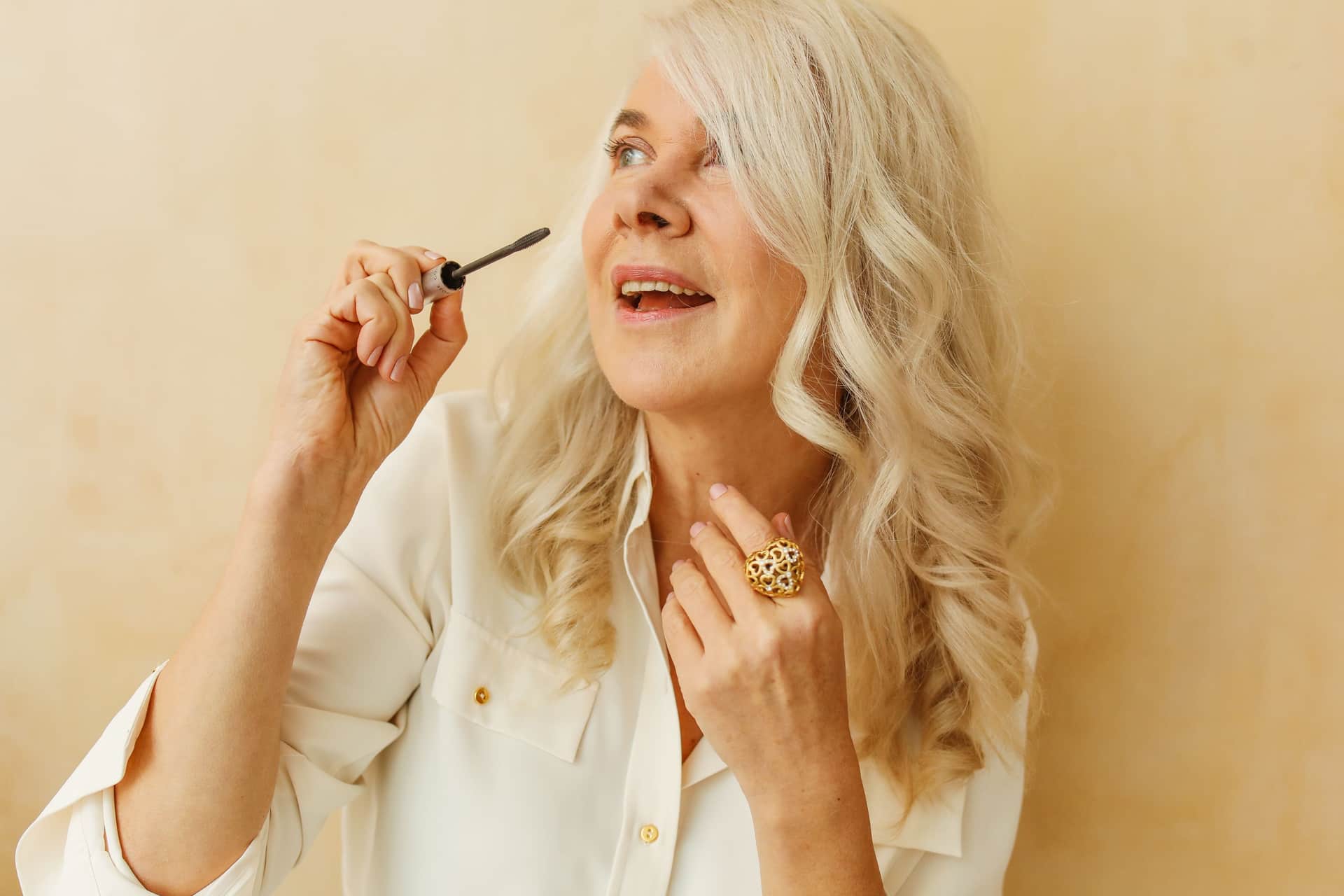
This is one of the few product questions in makeup where the honest answer contradicts the category name. A mascara cannot bend a lash. What it can do is coat a lash and then set, and if the lash was curled when the coating set, the coating holds it there. So "curling mascara" is a claim about hold, and once you read it that way the choice gets much simpler.
Which matters more after 50, because lashes change in a way that works against curl. They thin, they grow shorter, and they tend to grow straighter and point downward rather than outward. A thinner lash has less structure to hold a shape, and a downward-pointing lash catches the lower lid, which is where mascara ends up under the eye instead of on the lash.
There is a second cause that no mascara addresses at all, and it is worth ruling out first. If the upper lid has relaxed and now rests on the lash base, it will flatten the curl within minutes no matter what is on the lashes, because the lid is physically pressing them down. If your curl collapses almost immediately rather than fading over hours, that is what is happening, and the answer is placement at the lash base rather than a different tube — best eyeliner for hooded mature eyes covers the same lid problem from the liner side.
Formula type is the variable that decides hold. A traditional mascara is wax, pigment and polymer: it dries but stays somewhat pliable, which is why it can be built in layers and why the lash gradually relaxes. A tubing mascara forms a continuous polymer tube around each lash, which sets firmer and keeps its shape — the same property that makes tubing mascara flake off in clean tubes rather than smudge. That firmness is the reason three of the four picks here are tubing formulas.
Waterproofing helps for a different reason. Humidity and moisture soften a wax film, which is why a curl often survives a dry morning and collapses on a damp afternoon. A water-resistant formula resists that softening, at the cost of a harder removal — which on thin under-eye skin is a real cost rather than a footnote.
What we looked for. Formulas that set firm rather than staying pliable; brushes that separate fine lashes instead of clumping them, because a clumped lash is heavier and droops sooner; removal that does not require scrubbing the thinnest skin on the face; and containers that work with a less steady hand.