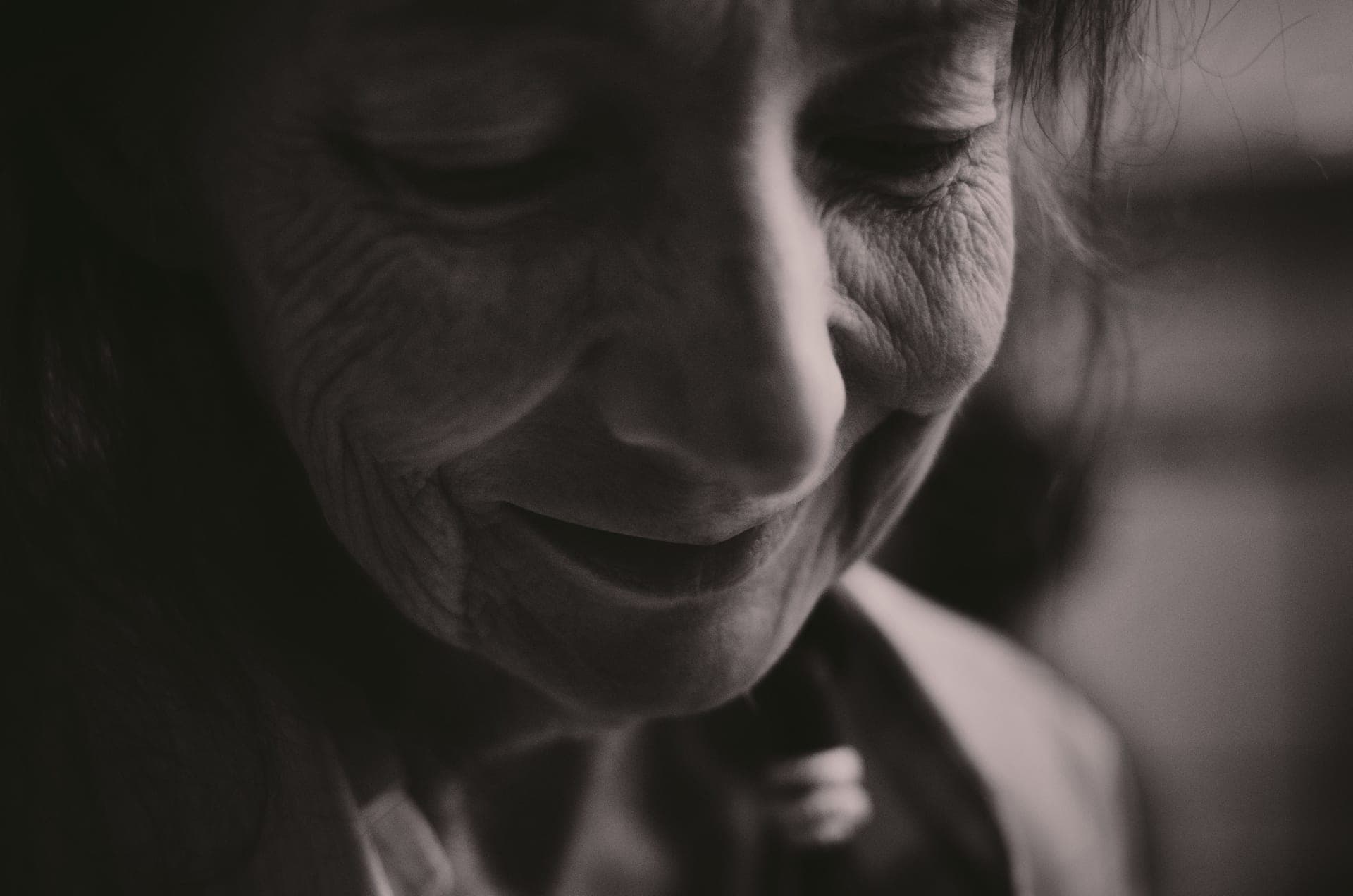
Crepiness is worth separating from a wrinkle, because they look similar in a mirror and behave completely differently under makeup. A wrinkle is one relatively deep fold — product runs into it and you get a line. Crepiness is a fine network of very shallow lines in thin, slack skin, usually across a wider area. Product does not run into one channel; it catches in dozens of them simultaneously, and the result reads as a dry, textured patch rather than as a line.
That difference changes what helps. For a single crease, you reduce the amount and keep the formula flexible. For crepiness, you also have to think about surface tension: a product that dries down and tightens as it sets pulls very slightly on slack skin, which exaggerates the crepe pattern rather than covering it. That is why matte formulas look so poor here and why they look worse by the hour.
The other factor is light. Crepey skin scatters light unevenly because the surface has many small facets. Anything that increases that scatter — a powder, a matte film, a dry patch — makes the texture more visible. Anything that returns light smoothly, like a hydrated surface or a very slightly radiant finish, makes it less so.
So the specification here is narrower than on any other page in this hub: thin, flexible, slightly radiant, and as little as possible. Hydration first, product second, powder ideally not at all.
And one honest observation. Crepey under-eye skin is the area where going bare most often wins. A well-hydrated crepey under-eye with no product on it frequently looks better than the same area with any concealer, and the makeup effort is better spent on brows and lashes. That is worth testing for a week before deciding it is not for you.