Skip to content

#AdWe earn commission on qualifying purchases made through links on this page. It never changes what we pick or how it ranks. How this works.

By Concern

Large pores over 50, start to finish

Pores are the one concern where how you apply the base matters more than which base you buy.

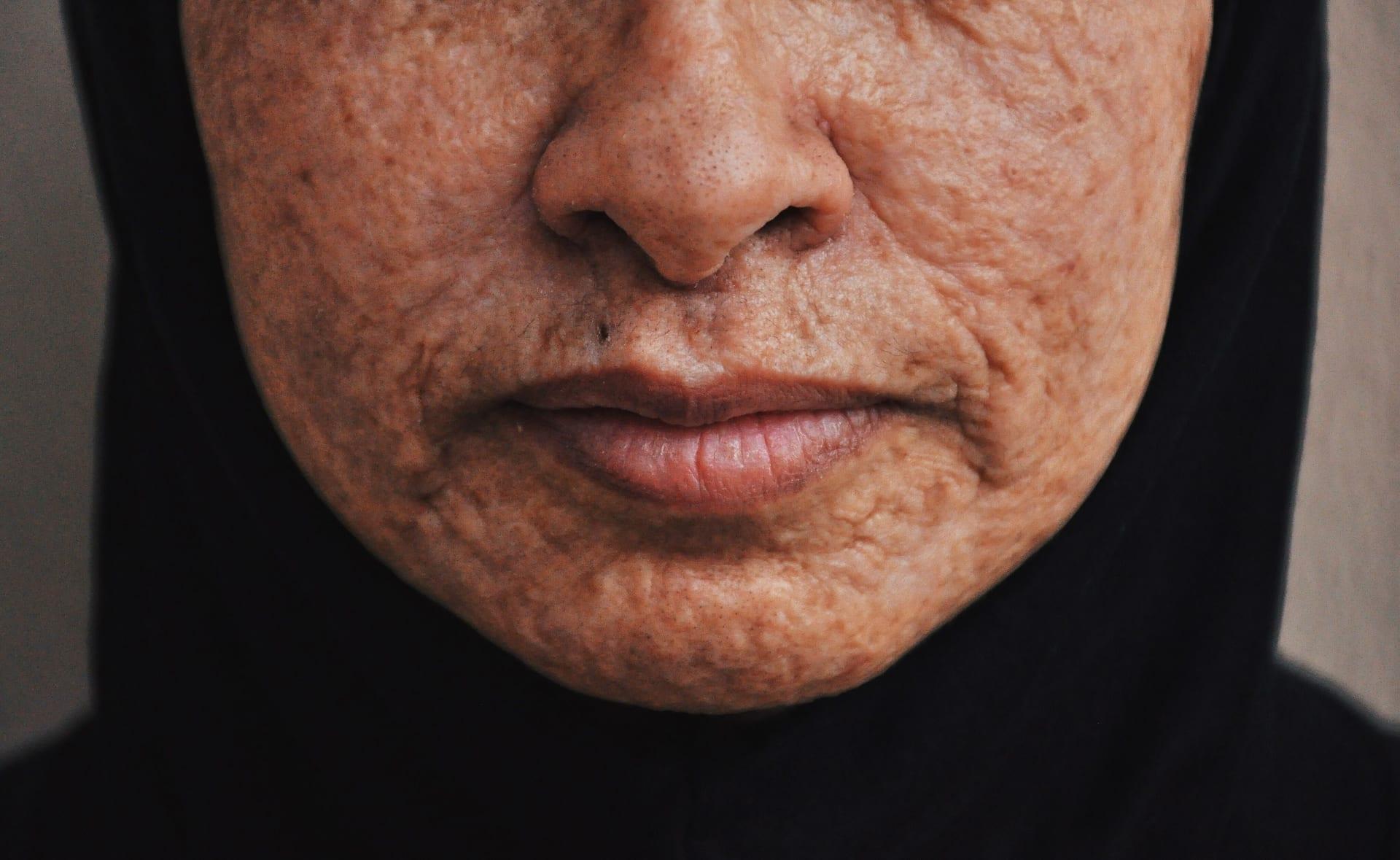
Close detail of an older woman's mouth and cheeks, showing lines, texture and uneven pigmentation

Short answer

Blur the pores optically rather than filling them: the Charlotte Tilbury Invisible UV Flawless Poreless Primer SPF 50 first, then the Clinique Even Better Makeup SPF 20 pressed in with the Real Techniques Miracle Complexion Sponge rather than swept with a brush. The stroke is the part most routines get wrong — pressing leaves product across the opening of a pore, sweeping pushes it in, and product inside a pore makes the pore darker and more visible, not less.

By Brijon M. · Last updated October 17, 2026

Our picks at a glance

Our picks at a glance, ranked. Select a row to read that product's full write-up.
#ProductBest forPrice
1
A plain white cosmetic bottle on a neutral beige background

Charlotte Tilbury Invisible UV Flawless Poreless Primer SPF 50

The step that does most of the work on this concern, and the product in this registry built specifically for it: a blurring primer aimed at visible pores, carrying SPF 50 — the highest sun protection of any primer here, which matters because sun exposure contributes to the loss of firmness that made the pores relax in the first place.

Best layer underneath
2
A plain white cosmetic bottle on a neutral beige background

Clinique Even Better Makeup SPF 20

The base specification for pores is narrower than it looks: thin enough to sit flat across an opening rather than sink into it, enough coverage to even the surrounding tone, and a natural finish rather than a radiant one, because returned light makes an open pore's shadow more obvious.

Best base
3
Cosmetic products arranged in a simple display in neutral tones

Real Techniques Miracle Complexion Sponge

The highest-value item on this page, and the cheapest.

Best tool
4
A plain white cosmetic jar photographed on a neutral studio background

Laura Mercier Translucent Loose Setting Powder

Powder is where a pore routine is usually lost, because a coarse powder settles into the openings and dries lighter than the skin around them, which turns each pore into a pale dot.

Best powder
5
A plain white cosmetic bottle on a neutral beige background

Smashbox Photo Finish Smooth & Blur Primer

The sensible step down if the premium primer is more than you want to spend on one step.

Best mid-price alternative
6
Cosmetic products arranged in a simple display in neutral tones

EcoTools Bioblender Makeup Sponge

On this list because the nose and the folds beside it hold the densest pores on the face and are the hardest place to press product flat.

Best tool for the nose

Prices live on Amazon and change constantly, so this site does not print a number it cannot verify. Every button goes to the current listing.

Why this is hard over 50

Pores do not actually get bigger with age. What happens is that the skin around them loses the firmness that was holding them closed, so the opening relaxes and reads as larger — and because that skin has also lost some evenness, the shadow inside each opening gets more legible. That distinction is worth having, because it tells you what to aim for: you are not shrinking anything, you are changing how light falls across the opening.

Which is why filling is the wrong instinct. The intuitive fix is to put something in the hole, and the whole pore-filling-putty category is built on that instinct. It fails twice over 50. Product sitting inside an opening is in shadow, so it goes darker than the surface and the pore becomes more visible rather than less. And a thick occlusive layer on skin that moves rolls out through the day, taking the base with it.

What works instead is diffusion at the surface. A film that bridges the opening and scatters light across it makes the edge of the pore less distinct, which is what reads as blurred. That is a thin, smoothing layer applied flat, not a thick one pushed down.

And that makes the tool and the stroke the decisive variables, which is unusual — for most concerns the formula decides the result. Here a good base swept with a brush will look worse than a mediocre base pressed with a damp sponge, because a sweeping stroke drags product across the opening and down into it, while a pressing stroke lays it over the top.

Pores also cluster, which is useful. They are concentrated on the nose, the inner cheeks beside it and the center of the forehead. That is a small area, so the blurring step is cheap to do properly and there is no reason to apply a pore primer anywhere else. For the formula-by-formula comparison at each step, best primer for mature skin with large pores and best foundation for mature skin with large pores go deeper than this page does.

What we looked for. Blurring by light diffusion rather than by film thickness; a base thin enough to sit flat across an opening instead of settling into it; a tool that presses; and containers that work with weak or sore hands.
The decision table

PickStepWhere it goesWhat it does for an open pore
Charlotte Tilbury Poreless PrimerUnder the baseNose, inner cheeks, center foreheadBridges the opening and diffuses light across it
Clinique Even Better MakeupBaseWhole face, two thin passesNatural finish, thin enough to sit flat rather than sink
Real Techniques Miracle SpongeToolEverywhere, pressed not sweptLays product over the opening instead of into it
Laura Mercier Translucent PowderPowderNose and inner cheeks, pressedFinely milled, so it does not granulate in an opening
Smashbox Photo FinishUnder the base, mid-pricePorous zone onlySilicone blurring, satin finish, long wear
EcoTools BioblenderTool, detailNostril folds and sides of the noseTapered tip reaches where a round sponge bridges

The picks in full

A plain white cosmetic bottle on a neutral beige background
Best layer underneath

Charlotte Tilbury Invisible UV Flawless Poreless Primer SPF 50

primer · Premium price band

A blurring primer aimed at visible pores, with SPF 50.

The step that does most of the work on this concern, and the product in this registry built specifically for it: a blurring primer aimed at visible pores, carrying SPF 50 — the highest sun protection of any primer here, which matters because sun exposure contributes to the loss of firmness that made the pores relax in the first place. Applied thinly across the nose, inner cheeks and center forehead, it bridges the openings and diffuses light across them. The pump meters a repeatable dose with one hand.

How it handles

Pump bottle.

What to know

Premium price, and a blurring primer is the formula most likely to pill under a water-based foundation, so the layers have to be compatible and the primer has to be dry before the base goes on. SPF 50 in a primer layer is thinner than the dose sunscreen testing assumes, so it supplements sun protection rather than replacing it.

A plain white cosmetic bottle on a neutral beige background
Best base

Clinique Even Better Makeup SPF 20

liquid foundation · Mid price band

A lightweight liquid with medium coverage, a natural finish and a wide shade range.

The base specification for pores is narrower than it looks: thin enough to sit flat across an opening rather than sink into it, enough coverage to even the surrounding tone, and a natural finish rather than a radiant one, because returned light makes an open pore's shadow more obvious. This is a lightweight liquid with medium coverage, a natural finish and a wide shade range — all four boxes — and it is oil-free, which suits the T-zone where the pores are. Mid price and a pump bottle.

How it handles

Pump bottle.

What to know

Medium coverage will not hide a deep pore on its own, and nothing will; this is the layer that evens the tone so the blurring step can do its job. A lightweight liquid needs to be applied in two thin passes rather than one thick one, which is more time than a stick.

Cosmetic products arranged in a simple display in neutral tones
Best tool

Real Techniques Miracle Complexion Sponge

tool · Drugstore price band

A latex-free blending sponge with a flat edge and a rounded base.

The highest-value item on this page, and the cheapest. A latex-free blending sponge with a flat edge and a rounded base, used damp and pressed into the skin, lays product across the opening of a pore and absorbs the excess — a thinner film, flat, with nothing driven downward. The flat edge handles the sides of the nose and the nostril folds, which is where pores are densest and a brush is at its worst. It is held in the palm rather than pinched, which makes it easier than a brush with sore finger joints.

How it handles

Held in the palm rather than pinched, which is why a sponge is often easier than a brush with sore finger joints.

What to know

A damp sponge absorbs some of your foundation, so you get through slightly more product. It needs washing regularly and replacing every few months — see [how to clean makeup brushes and sponges](/guides/how-to-clean-makeup-brushes-sensitive-mature-skin), because a loaded sponge is one of the commonest causes of a patchy base.

A plain white cosmetic jar photographed on a neutral studio background
Best powder

Laura Mercier Translucent Loose Setting Powder

setting powder · Premium price band

A finely milled loose powder with a soft-focus finish.

Powder is where a pore routine is usually lost, because a coarse powder settles into the openings and dries lighter than the skin around them, which turns each pore into a pale dot. This is a finely milled loose powder with a soft-focus finish: the milling keeps it from granulating in an opening, and soft-focus is diffusion by another name, so it continues the job the primer started. A trace on a small dense brush, pressed on the nose and inner cheeks only.

How it handles

Jar with a sifter and a screw lid. Loose powder spills if your grip slips — the pressed version does not.

What to know

Premium price, and a loose powder in a sifter jar needs two hands and spills if your grip slips. Swept rather than pressed, or used across the whole face, it will do precisely the thing described above, so the application instruction is not optional.

A plain white cosmetic bottle on a neutral beige background
Best mid-price alternative

Smashbox Photo Finish Smooth & Blur Primer

primer · Mid price band

A silicone-led blurring primer with a satin finish and long wear.

The sensible step down if the premium primer is more than you want to spend on one step. A silicone-led blurring primer with a satin finish and long wear fills surface irregularities and gives the base something stable to sit on, which is the same mechanism at a lower price. The satin finish is a reasonable compromise on a T-zone that is both porous and shiny: more shine control than a hydrating primer, far less drying than a hard matte.

How it handles

Squeeze tube with a screw cap.

What to know

Silicone-heavy primers are the most likely of all to pill under or over a water-based foundation, and this one is the most silicone-led in the registry — test the pair before an event. No SPF, a screw-cap tube that needs two hands, and a satin finish still shows some shine by late afternoon.

Cosmetic products arranged in a simple display in neutral tones
Best tool for the nose

EcoTools Bioblender Makeup Sponge

tool · Drugstore price band

A biodegradable blending sponge with a tapered tip for the under-eye.

On this list because the nose and the folds beside it hold the densest pores on the face and are the hardest place to press product flat. This is a biodegradable blending sponge with a tapered tip, which reaches into the nostril fold and the inner corner of the eye where a rounded sponge bridges over the top. It is palm-held with no grip strength required, and it is cheap enough to keep a second one for the detail work rather than using one sponge for everything.

How it handles

Palm-held, with no grip strength required.

What to know

A small tapered sponge holds less product and takes more passes than a full-size one, so it is a companion rather than a replacement. Like any sponge it needs frequent washing and regular replacement, and a biodegradable material breaks down faster than a synthetic one.

The stroke, which is the part nobody explains

Press, do not sweep. The whole page turns on this. Pressing lays product across an opening; sweeping drags it in. If you change one thing, change this.

Work from the outside of the face inward. By the time you reach the nose and inner cheeks there is less product left on the sponge, which is exactly what you want in the porous zone.

Damp sponge, not wet. Squeezed out properly. A wet sponge dilutes the base into the pores; a dry one drags.

Two thin passes, not one thick one. A thin film bridges an opening. A thick film sags into it and then cracks at the edge.

On the nostril folds, use the point and press downward into the fold, rather than running the sponge along it. Along the fold is how product ends up in a visible line.

Let each layer set before the next. Primer dry before base, base settled before powder. Stacking wet layers is the other half of why pore routines pill.

What makeup can and cannot do here

It can change how distinct the edge of a pore looks. That is the realistic goal, and a good blurring step achieves it at normal conversational distance.

It cannot make a pore smaller. Nothing in a makeup bag changes the size of an opening, and any product claiming to is describing an optical effect in physical language.

It will not survive a close-up photograph as well as it survives a mirror. Diffusion depends on diffuse light, and a flash is the opposite — see best foundation for photos.

Sun protection is the only part of this routine that affects the cause. Loss of firmness in the skin around a pore is driven partly by cumulative UV exposure, which is why the SPF figure on the primer is doing more long-term work than the blurring is.

Pores on an oily face need the zonal approach as well. The two concerns overlap heavily and the T-zone is the same area — best makeup for mature oily skin has that routine.

Texture that is not pores needs a different product. If the unevenness is fine lines and roughness rather than discrete openings, best blurring primer for textured mature skin is the better page.

What we have and haven't established

That pore openings appear larger as the surrounding skin loses firmness, and that cumulative sun exposure contributes to that loss, are documented features of aging skin rather than claims unique to this site. The optical account — that product sitting inside an opening is in shadow and therefore reads darker, while a film bridging the opening scatters light across it — is ordinary optics applied to this case, and we state it as our reasoning.

The conclusion that the tool and the stroke matter more here than the formula is editorial judgment, drawn from that optical account rather than from a trial.

Mechanisms, finishes, coverage levels, milling, SPF figures and container types come from the manufacturer and retailer listings cited below. Every product was confirmed currently on sale before being featured.

We have not measured pore size, photographed these products at close range, tested wear time or run a panel. There is no laboratory behind this site.

Nothing here is dermatological advice, and makeup does not treat enlarged pores. Pores that have changed noticeably in a short time, or that are inflamed, are a question for a doctor.

What we'd skip

Pore-filling silicone putties. Thick, occlusive, and they roll off through the day taking the base with them — and the product that stays behind sits in shadow and darkens the pore.

Anything applied with a sweeping brush stroke on the nose. The stroke drives product into the openings, which is the opposite of the goal.

Full coverage used as a pore strategy. More product is more film to crack at the edge of each opening. Coverage evens tone; it does not blur texture.

Radiant and dewy finishes across the T-zone. Returned light makes the shadow inside an open pore more obvious, not less.

Coarse pressed powders. They granulate in the openings and dry lighter than the surrounding skin, which turns every pore into a pale dot.

Pore strips as makeup prep. They remove surface debris and irritate the skin that was holding the opening closed, and an irritated face takes makeup worse.

Questions people ask

What is the best makeup for mature skin with large pores?

A blurring primer on the porous zone — the Charlotte Tilbury Invisible UV Flawless Poreless Primer SPF 50 — under a thin medium-coverage liquid such as the Clinique Even Better Makeup, pressed in with a damp sponge rather than swept with a brush. The stroke matters as much as the products.

Do pores get bigger with age?

The openings do not grow. The skin around them loses firmness, so the opening relaxes and reads as larger, and the shadow inside it becomes more legible. That is why the goal is diffusing light across the opening rather than shrinking anything.

Should I fill my pores with primer?

No. Product sitting inside an opening is in shadow, so it goes darker than the surface and makes the pore more visible. What works is a thin film bridging the opening and scattering light across it.

Brush or sponge for large pores?

A damp sponge, pressed. A brush sweeps product across and into the openings; a sponge presses it flat over the top and absorbs the excess. This is the single highest-value change on the page and it costs very little — brush vs sponge for mature skin has the general case.

Does powder make pores look worse?

A coarse one does — it granulates inside the openings and dries lighter than the skin around them, turning each pore into a pale dot. A finely milled powder, pressed on in a trace, continues the blurring instead.

Where are pores worst on the face?

The nose, the inner cheeks beside it and the center of the forehead. That is a small area, so the blurring step is cheap to do thoroughly and there is no reason to put a pore primer anywhere else.

Where this comes from

How this page was put together. Picks are chosen by reading formulas, ingredient lists, packaging and dispensing design, and the reported experience of people with mature skin. Primer & Poise does not operate a laboratory, does not run a tester panel, and does not claim professional cosmetology, esthetics or medical credentials. Where a figure or a claim could not be verified, this page says so instead of filling the gap. Read the full selection method.

Sources